🌙 Introduction: When “Just Once” Turns Into “Too Often”
Have you ever woken up in the middle of the night, half-asleep, heading to the bathroom, wondering if it’s normal? For many adults, getting up once to urinate during the night feels ordinary. But when those bathroom trips start interrupting sleep multiple times a night, it might be a sign of something more.
Nighttime urination — or nocturia, as doctors call it — can range from perfectly normal to a possible indicator of an underlying health condition. The tricky part? The line between normal and abnormal isn’t always obvious.
In this guide, we’ll break it down clearly: how much is too much, what causes frequent nighttime urination, and most importantly, what you can do to manage it naturally and effectively.
🚻 Understanding Nocturia: What It Really Means
Nocturia comes from Latin roots meaning “night” and “urination.” It simply refers to waking up one or more times during the night to pee.
A few important things to note:
- It’s not the same as bedwetting.
- It’s common, especially as people age.
- It affects both men and women, though for different reasons.
How Often Is “Normal”?
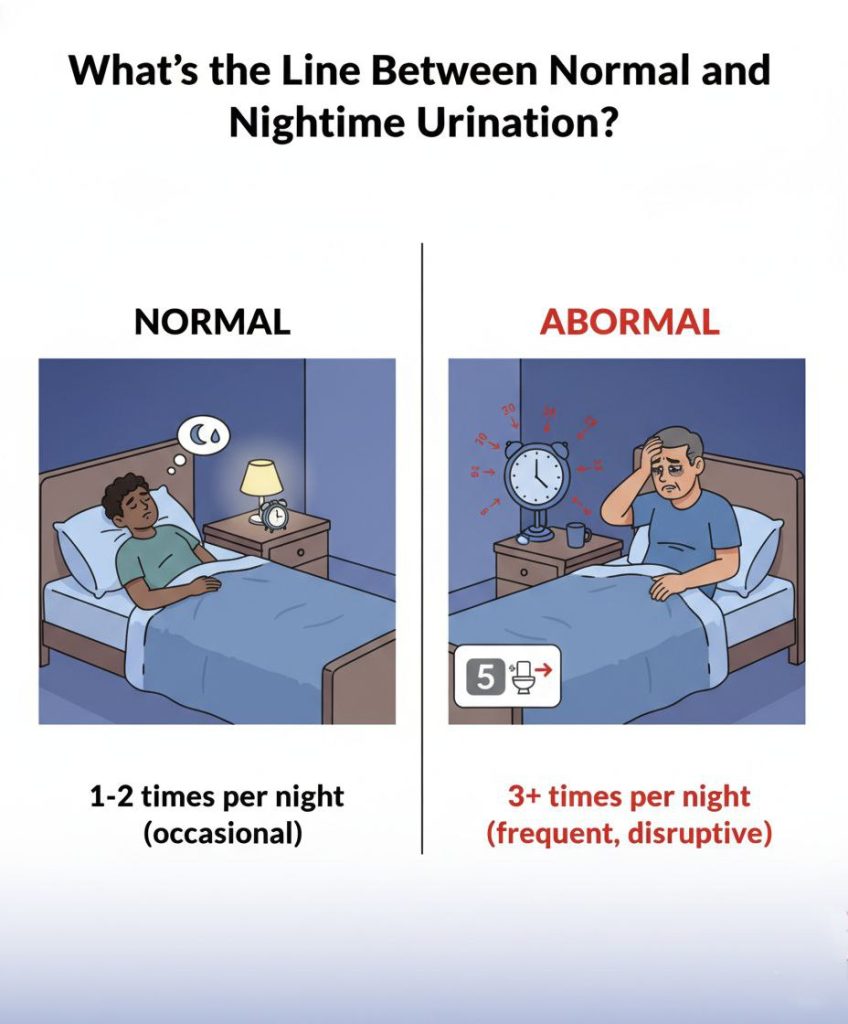
- 0–1 time per night: Generally considered normal for adults.
- 2+ times per night: Usually considered mild nocturia.
- 3+ times per night: May be abnormal and worth discussing with a doctor, especially if it affects your sleep or quality of life.
💤 Fun fact: About one in three adults over 30 wakes up at least once to urinate during the night, and the frequency increases with age.
🧠 Why Nighttime Urination Happens
There’s no single cause of nocturia — rather, it’s usually a combination of lifestyle habits, body changes, or medical conditions.
Let’s look at the most common culprits.
1. Drinking Too Much Before Bed
Simple but common: consuming lots of fluids close to bedtime — especially caffeinated or alcoholic beverages — can fill the bladder and disrupt sleep.
Fix: Avoid drinking anything heavy within 2–3 hours of bedtime.
2. Caffeine, Alcohol, and Diuretics
Caffeine (coffee, tea, soda) and alcohol act as diuretics, meaning they make your body produce more urine. Some blood pressure medications also have this effect.
Fix: Cut back on evening caffeine and alcohol. Ask your doctor if your medication might contribute.
3. Aging and Hormonal Changes
As we age, the bladder’s capacity to hold urine decreases, and the body produces less of the hormone that helps retain water at night (vasopressin).
Men may also experience prostate enlargement, while women may see bladder changes after menopause.
Fix: Regular exercise and bladder training can help manage nighttime frequency.
4. Underlying Medical Conditions
| Possible Condition | How It Affects You |
|---|---|
| Diabetes | Excess sugar in blood increases urine production. |
| Heart failure | Fluid builds up during the day, shifts at night, and increases urination. |
| Kidney disease | The kidneys lose ability to concentrate urine. |
| Sleep apnea | Hormonal imbalances from poor sleep can trigger more urine output. |
| Urinary tract infections (UTI) | Constant urge to urinate, even when bladder is nearly empty. |
If you suspect any of these, consult a healthcare provider for evaluation.
5. Pregnancy
In women, pregnancy can cause nocturia due to pressure from the growing uterus and hormonal shifts. This is temporary and usually resolves after childbirth.
🛏️ When Is It Considered Abnormal?
While getting up once a night is normal for many, you should take it seriously if:
- You’re waking more than twice per night, regularly.
- You’re feeling extremely tired or irritable during the day.
- You notice burning, pain, or blood during urination.
- You experience swelling in your legs or ankles.
If these sound familiar, it’s time to look deeper — your body may be trying to tell you something.
🩺 The Hidden Impact: Why You Shouldn’t Ignore It
Frequent nighttime urination isn’t just inconvenient — it can affect your entire well-being.
🌜 Sleep Disruption
Constantly waking up breaks the natural sleep cycle, leading to poor rest, low energy, and mood swings.
💔 Heart and Kidney Strain
If your body is producing too much urine at night, it could be linked to fluid imbalance or heart and kidney stress.
🧠 Mental Fatigue
Interrupted sleep increases stress hormones, weakens focus, and impacts overall productivity.
The sooner you identify the cause, the better you can restore your health and your nights.
🧃 Lifestyle Changes That Can Help
You don’t need medication right away — often, simple lifestyle tweaks make a big difference.
1. Time Your Fluid Intake
- Drink plenty during the day.
- Limit fluids 2–3 hours before bed.
- Avoid caffeine or alcohol after 6 p.m.
2. Elevate Your Legs
If you notice swelling in your legs during the day, try raising them for 20–30 minutes before bed. This helps move excess fluid from your legs back into circulation before you lie down.
3. Establish a “Bathroom Schedule”
Train your bladder by going at regular times rather than waiting for urgency.
Over time, this helps reduce nighttime frequency.
4. Keep Your Bedroom Cool and Calm
Believe it or not, overheating during sleep can increase sweating and thirst — both of which contribute to nighttime urination.
5. Maintain a Healthy Diet
- Reduce salt intake (too much salt makes your body retain fluid).
- Eat potassium-rich foods like bananas and spinach to balance electrolytes.
- Avoid processed, salty snacks late at night.
6. Exercise Regularly
Movement helps improve circulation, prevent fluid buildup, and regulate hormones that affect urine production.
🧘 Natural Home Remedies That Support Bladder Health
| Ingredient | Benefit | How to Use |
|---|---|---|
| Cranberry Juice (unsweetened) | Supports urinary tract health | Drink small glass in the morning |
| Pumpkin Seeds | Rich in zinc, supports bladder muscles | Add to breakfast bowls |
| Parsley Water | Mild diuretic, reduces salt buildup | Boil parsley leaves, strain, and drink |
| Apple Cider Vinegar | Balances pH and reduces bladder irritation | 1 tsp in warm water before meals |
📋 Tracking Your Nighttime Bathroom Trips
Try keeping a simple “bladder diary” for a week. Write down:
- When you go to bed
- When you wake to urinate
- What and when you drank
- How much urine you passed (estimate)
This helps your doctor pinpoint the root cause more accurately.
[Insert Screenshot Here: Example of a simple 24-hour bladder diary table]
⚠️ When to See a Doctor
Don’t ignore nighttime urination if:
- You’re waking up 3 or more times nightly.
- You have pain, urgency, or burning.
- You’re noticing blood or dark urine.
- You feel excessive thirst or fatigue (possible diabetes).
- You have swollen ankles or legs.
Your healthcare provider may recommend tests such as:
- Urinalysis (to check for infection or kidney function)
- Blood sugar test (for diabetes)
- Ultrasound (for prostate or bladder health)
- Sleep study (if sleep apnea is suspected)
💬 The Takeaway: Normal vs. Abnormal
| Frequency (per night) | Category | What It Means |
|---|---|---|
| 0–1 | Normal | Common for most adults |
| 2–3 | Mild nocturia | Possibly due to fluid intake or caffeine |
| 4+ | Abnormal | Could indicate medical condition |
In short:
👉 Once a night = Normal
👉 Two or more = Pay attention
👉 Three or more = Get checked
🏁 Conclusion: Restore Restful Nights, One Habit at a Time
Nighttime urination can be a frustrating cycle, robbing you of deep rest. But in many cases, it’s not a disease — it’s a signal.
Simple lifestyle changes — like watching what you drink, staying active, and managing stress — can restore peaceful nights. And if it’s something deeper, identifying it early means faster, safer treatment.
So tonight, when you tuck in, remember: listening to your body is the smartest thing you can do. Your bladder — and your sleep — will thank you. 🌙