Introduction: Why Knowing Your Numbers Matters
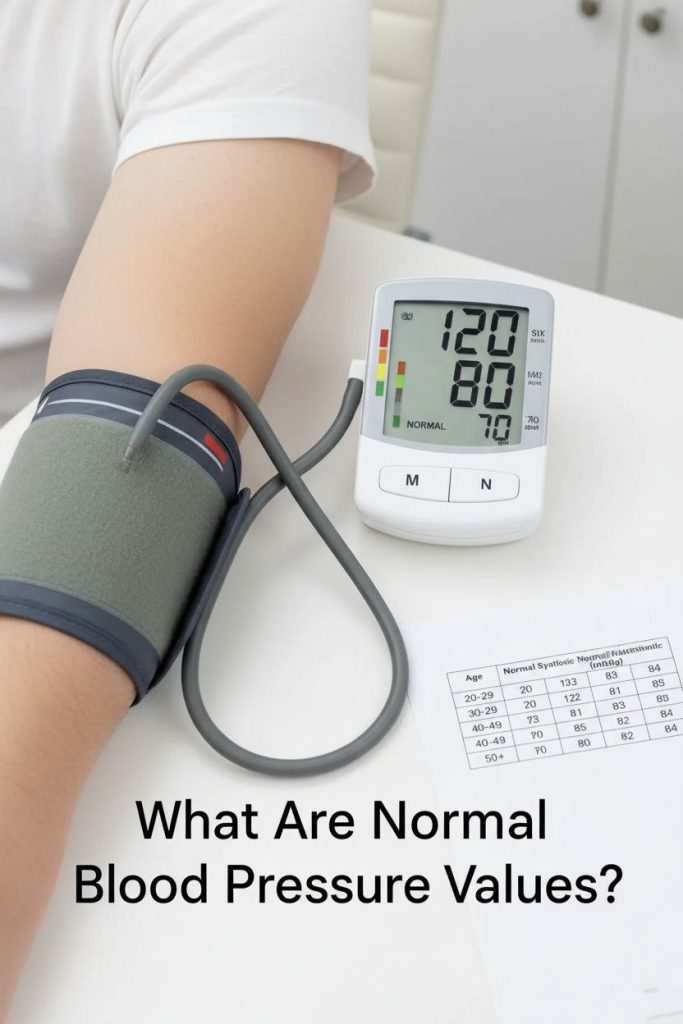
You might glance at your blood pressure reading and hear something like “120 over 80 mm Hg,” but what does that actually mean? And more importantly—what counts as normal, and when should you be concerned?
Understanding normal blood pressure values is more than just knowing a number. It’s about knowing how your heart and arteries are performing, what your risk is, and how to tailor habits around keeping your vascular health strong.
In this article, I’ll walk you through what blood pressure is, what “normal” really means, how values differ by age and gender, how to measure properly, when to worry, and how you can support healthy values through everyday choices.
What is Blood Pressure—Broken Down Simply
Blood pressure is essentially the force your blood applies against the walls of your arteries as your heart pumps it around your body. It’s measured in millimetres of mercury (mm Hg) and expressed as two numbers:
- Systolic pressure (top number): the pressure when your heart beats and pushes blood out.
- Diastolic pressure (bottom number): the pressure when your heart is resting between beats, as it fills with blood.
Because your body is constantly responding to what you’re doing—walking, sitting, stressed, relaxed—your blood pressure will fluctuate. The “normal” range is more of a guide than a fixed target for everyone.
What Counts as “Normal” Blood Pressure Values?
According to major heart health authorities:
- Normal: Systolic less than 120 mm Hg and Diastolic less than 80 mm Hg.
- Elevated: Systolic between 120–129 mm Hg and Diastolic less than 80 mm Hg.
- Hypertension Stage 1: Systolic 130–139 mm Hg or Diastolic 80–89 mm Hg.
- Hypertension Stage 2: Systolic 140 mm Hg or higher or Diastolic 90 mm Hg or higher.
- Hypertensive crisis (medical emergency): Systolic higher than 180 mm Hg and/or Diastolic higher than 120 mm Hg.
If your reading is in the normal range, it’s a strong sign you’re doing something right. If it’s elevated or higher, don’t panic—this is your body’s message to pay attention and act.
Do “Normal” Values Vary by Age, Gender, or Individual?
Yes—there’s more nuance than a one-size-fits-all number. For example:
- Research shows that average “normal” values shift slightly with age.
- There are slight differences between men and women: for ages 18-39, one dataset shows average around 119/70 mm Hg for men and 110/68 mm Hg for women.
- The “ideal” target for you may depend on your overall health, whether you have kidney disease, heart disease, diabetes or other conditions.
So while aiming for below 120/80 is a good general goal, your personal target could vary—and that’s perfectly normal.
How to Measure Blood Pressure Properly at Home or Clinic
Getting an accurate reading matters, otherwise you could get misleading results and unnecessary stress. Follow these steps:
- Sit quietly for at least 5 minutes before measuring.
- Use a cuff that fits your arm properly.
- Avoid caffeine, smoking or heavy activity 30 minutes before measurement.
- Place your arm on a flat surface; keep your feet flat on the floor and back supported.
- Take two readings one minute apart and average them. If they differ significantly, take a third.
- Preferably measure at the same time of day (morning and evening) for consistency.
Why Abnormal Values Matter: Risks of Too High or Too Low
High Blood Pressure
Often called the “silent killer” because you may feel fine—but high values damage your arteries, heart, brain and kidneys over time. If untreated, it raises the risk of heart attack, stroke, kidney failure and other serious conditions.
Low Blood Pressure (Hypotension)
While less common as a concern in the general population, blood pressure that is too low (for example less than 90/60 mm Hg) can cause dizziness, fainting, poor circulation and organ under-perfusion. The key is your body’s symptoms—what might be “normal” for one person could be low for another.
Practical Steps to Keep Your Blood Pressure in the Healthy Zone
Good news: many of the actions that support “normal values” are simple lifestyle habits. Here are effective steps:
- Eat a balanced diet — more vegetables, fruits, lean protein; less salt and processed foods.
- Maintain a healthy weight — even losing a few kilograms can reduce blood pressure.
- Stay active — aim for ~150 minutes of moderate exercise weekly (brisk walking, cycling).
- Limit alcohol consumption and avoid smoking.
- Manage stress — chronic stress keeps your blood pressure elevated.
- Sleep well — aim for 7-8 hours of quality sleep.
- Monitor at home regularly — knowing your numbers helps you and your doctor tailor the plan.
- Follow medical advice — if you have conditions like diabetes, kidney disease or heart issues, your target may differ and your doctor may recommend medications or specific treatments.
Quick Reference Table: Blood Pressure Categories
| Category | Systolic (mm Hg) | Diastolic (mm Hg) | What it means |
|---|---|---|---|
| Normal | <120 | <80 | Good range; maintain healthy habits |
| Elevated | 120–129 | <80 | At risk; adopt or strengthen habits |
| Hypertension Stage 1 | 130–139 | 80–89 | Needs lifestyle changes + check-in |
| Hypertension Stage 2 | ≥140 | ≥90 | Likely needs medical care |
| Hypertensive Crisis | >180 | >120 | Emergency—seek immediate help |
When to See a Doctor
- If your readings consistently fall into elevated or higher categories.
- If you experience symptoms like chest pain, shortness of breath, vision changes, persistent headaches, or dizziness.
- If you have risk factors such as heart disease, kidney issues, diabetes, or family history of hypertension.
- If you are considering a change in medication or major lifestyle shift—get a healthcare professional’s input.
Final Thoughts: It’s Your Numbers—Own Them
Your blood pressure values aren’t just arbitrary—they’re a real reflection of how your body is working right now. A reading of 118/76 mm Hg may feel “just fine,” but knowing why it’s good, how it was achieved and how you can keep or improve it—that’s where you gain power.
If your reading is higher than the “normal” range, don’t feel alarmed. Think of it as a signal—not a verdict. You have the ability to influence many of the drivers behind those numbers: weight, diet, exercise, stress, sleep.
Make checking your blood pressure a simple habit, learn what your best target is, and invest in your cardiovascular health. One number today might seem small—but it adds up in years of healthier, stronger living.