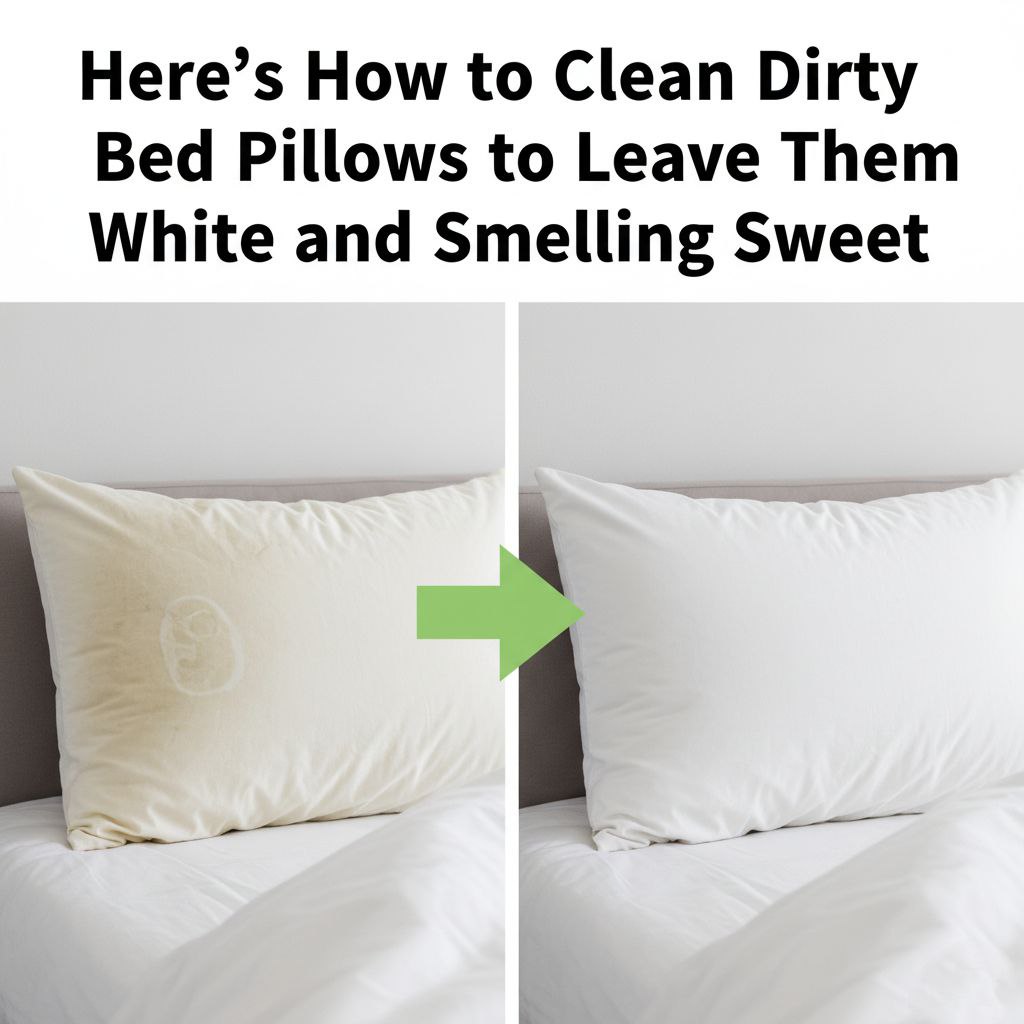
🛏️ Introduction: When Your Pillow Looks Tired, Why Your Room Feels Tired
Think about this: you change your sheets regularly, maybe even your duvet cover—but your pillows? Often ignored. Yet your pillow is the place where your head rests hours every night, soaking up sweat, oils, dead skin cells, dust mites and more. Over time it becomes dingy, smells musty, loses shape—and your sleep experience suffers.
But here’s the good news: you can bring your pillows back to life. With the right cleaning routine, you can make them white again, fluffier, and smelling fresh—without buying new ones. In this post I’ll walk you through why pillows get dirty, how often to clean them, step-by-step washing or deep-cleaning routines, ways to refresh the smell, and how to maintain them so they stay clean longer.
👀 Why Your Pillows Get Dirty & Lose Their Freshness
Let’s break down what’s happening under that pillowcase.
1. Accumulation of Everyday Grime
- While you sleep, your scalp and skin naturally shed oils and dead skin cells—these transfer to the pillow.
- If you eat or drink in bed, that adds spills or odor-causing agents.
- Over months, all that builds up inside the pillow—even if the outer case is washed.
2. Dust Mites, Allergens & Moisture
- Pillows attract dust mites, pollen, pet dander and other allergens—especially in warm humid rooms.
- As moisture from breath or sweat accumulates, pillows may develop a musty odor.
- According to cleaning experts, pillows should ideally be washed every 3-6 months to avoid build-up.
3. Staining and Yellowing
- Over time the pillow surface may turn yellowish—due to sweat, oils, saliva or pillow protectors failing.
- Sunlight fades color, but stains and internal build-up remain unless cleaned thoroughly.
4. Loss of Support & Shape
- Even when visually clean, worn pillows lose loft, feel flat or clumpy—and their hygiene suffers. If you fold a pillow and it stays folded, that’s a sign it’s time to replace.
Given all of this, a targeted cleaning routine isn’t just nice—it’s necessary for comfort, hygiene and longevity.
✅ Step-by-Step: How to Clean Your Bed Pillows Properly
A. Check the Fill & Label First
Before any cleaning, identify what you have:
- Synthetic fiberfill pillows (polyester, micro-fibre) → often machine-washable.
- Feather or down pillows → many are washable but require gentle care.
- Memory foam, latex or solid-foam pillows → not usually machine-washable; require spot cleaning.
B. Machine Wash (for washable pillows)
What you’ll need:
- Mild detergent
- White distilled vinegar (optional)
- Two pillows (to balance the machine)
- Dryer balls or tennis balls
Procedure:
- Remove pillowcase and any protector.
- Pre-treat stains: dab a small amount of detergent on yellow spots or oil build-up.
- Place two pillows in the washing machine to balance load.
- Set to gentle/delicate cycle, warm or cold water depending on label.
- Optionally add ½ cup white vinegar in the rinse cycle to neutralize odor and help whiten.
- After wash, remove pillows and gently squeeze out excess water—do not wring.
- In the dryer, add dryer balls or tennis balls to help fluff. Dry on low heat until pillows are completely dry (this may take longer than regular loads).
- Remove and reshape pillows while warm—fluff and restore loft.
C. Hand or Spot Clean (for non-washable pillows)
- Fill a large basin or bathtub with lukewarm water + mild detergent + maybe ¼ cup white vinegar.
- Submerge the pillow if possible (only if safe for the fill). Gently squeeze, do not twist.
- Drain and refill with clean water for rinse cycles until no soap remains.
- Press out water gently, then lay flat to air-dry on a rack or towels, flipping periodically for even drying.
- For spot cleaning: mix equal parts water + white vinegar, spray on stain, blot gently, let air dry.
D. Refreshing Smell and Appearance
- After wash or while drying, sprinkle a small amount of baking soda over the pillow surface, let sit an hour, then vacuum off. This helps remove odor.
- Place pillows under direct sunlight for 1-2 hours (weather permitting) to kill bacteria and freshen fabric.
- Use a scented pillow mist or essential-oil spray (lightly) after drying to keep smell fresh—just ensure your pillowcase is washable too.
📅 Routine Maintenance & Frequency
| Task | How Often | Notes |
|---|---|---|
| Wash pillowcases | Weekly | Keeps outer layer clean |
| Clean pillows (wash/refresh) | Every 3-6 months | Depends on pillow type & personal hygiene habits |
| Spot-clean odor/stains | As needed | If you notice yellowing or mustiness sooner |
| Replace pillow | Every 1-2 years (or if shape lost) | If pillow fails the fold-test, replace |
Regular maintenance keeps your pillows white, fresh and comfortable—not waiting until they’re stained and flattened.
🔎 Common Problems & How to Solve Them
| Problem | Cause | Solution |
|---|---|---|
| Pillows still stained/yellow | Stains settled deep, finish degraded | Consider replacing pillow or deep-clean soak with stronger agent |
| Pillow takes too long to dry | Over-loaded dryer or high heat | Use low heat, add tennis balls, separate pillows |
| Towelling or foam disintegrates | Incorrect cleaning method | Always follow fillcare tag; spot-clean foam |
| Odour after wash | Insufficient rinse, residual detergent | Add vinegar in rinse, ensure full dry |
| Pillow flat after wash/over time | Loss of pilot fill support | Fluff daily, dry fully, replace when no longer bouncing back |
🌟 Why It’s Worth the Effort
- Better hygiene = fewer allergens, dust mites, and skin reactions.
- Whites look brighter, not dingy or yellowed.
- Pillows feel more supportive, comfortable and look new longer—saving money.
- Your sleep space feels fresher, cleaner—and that improves mood and rest quality.
- You prolong the life-of your pillow and protect your bedding investment.
🏷️ Pro Tips & Insider Fixes
- Use pillow protectors with zip closure under pillowcase to block oils and sweat before they reach pillow—makes cleaning easier.
- Rotate your pillows end to end (head to foot) every few weeks so wear is even.
- Avoid eating in bed or applying heavy creams/hair products before sleep—they stain pillows.
- If you suffer from allergies, opt for allergen-proof covers and rinse pillows with hot water when safe.
- Consider investing in a second set of pillows—so when you wash one pair, you sleep on the other and maintain consistency.
🏁 Conclusion: Fresh Pillows, Fresh Sleep
Your bed may look inviting, but if the pillows are tired and dingy, your whole sleep experience suffers. By cleaning your pillows properly—and maintaining them—you’re not just extending the life of bedding; you’re investing in quality sleep, comfort, hygiene and home aesthetics.
Follow the steps: check your pillow type, wash or spot-clean appropriately, bring back whiteness and scent, maintain with routine. Do it now—and you’ll wake up in a bed that feels new again.
Here’s to fluffy, white, fresh-smelling pillows and the better nights ahead. Sleep well! 🌙🕊️