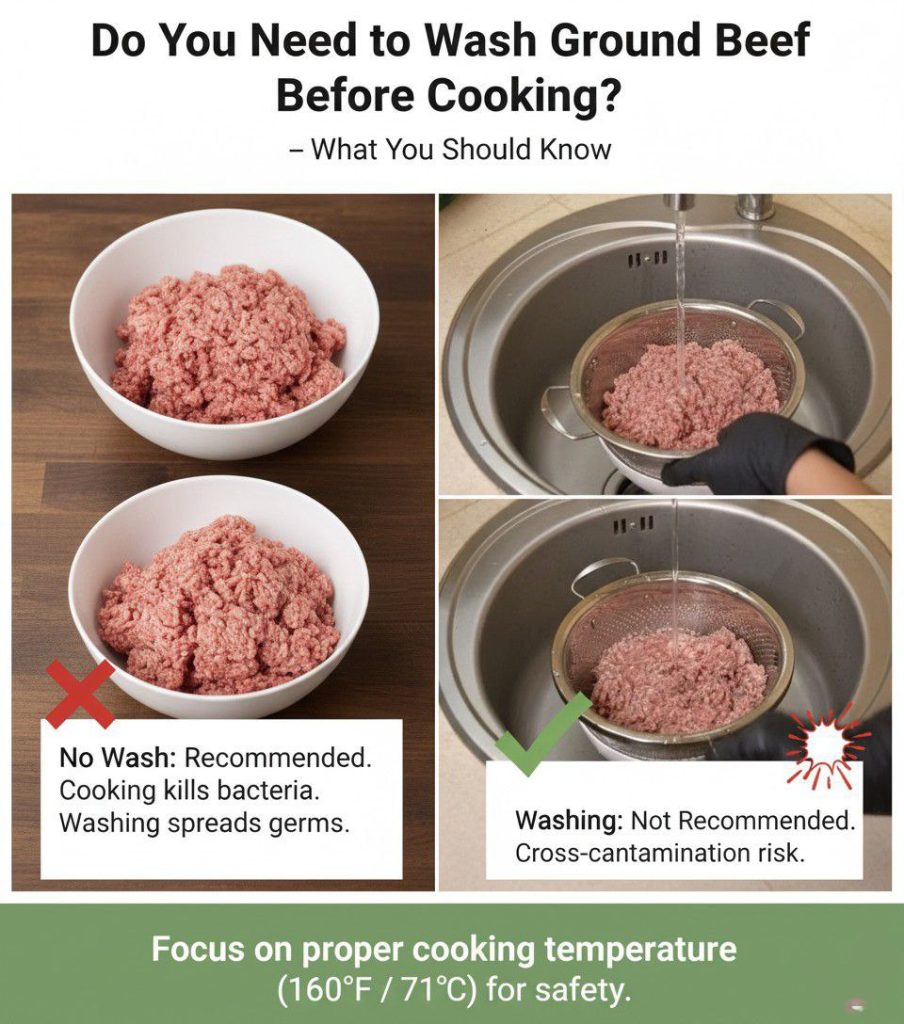
🍔 Introduction: The Question Many Home Cooks Ask
You’re in the kitchen, ready to cook ground beef for a taco night, a spaghetti sauce, or a chilli. You pause. “Should I rinse the ground beef first?” Maybe you’ve seen older generations scrubbing meat in the sink, or you read on a cooking forum that rinsing is good. But other advice says “definitely don’t.” Who is right?
In this article we’ll explore:
- Why some people wash ground beef—and why food-safety experts generally advise against it
- What risks you might be introducing by rinsing meat
- The correct way to handle, cook and store ground beef safely
- Practical tips for home cooking with ground beef
By the end, you’ll know exactly what to do—and what not to do—so you can cook safely, efficiently and confidently.
🧪 Why Would Someone Want to Wash Ground Beef?
Let’s start with the reasons some home cooks think washing ground beef makes sense:
- They want to remove surface “impurities”, blood or juices.
- They believe rinsing will get rid of bacteria or make meat “cleaner.”
- They assume a visual clean equals a safer-to-eat product.
- Cultural or inherited practices: their parents or grandparents rinsed before cooking.
These reasons come from good intentions—but modern food safety standards have new information.
🚫 Why Food Safety Experts Say “Don’t Wash Ground Beef”
Health agencies such as the United States Department of Agriculture (USDA) and food-safety services strongly advise against washing raw meat, including ground beef. Here are key reasons:
1. Cross-contamination Risk
When you rinse or wash ground beef under running water, tiny droplets splash and can carry bacteria like E. coli or Salmonella from the meat onto surrounding surfaces, kitchen tools, fresh produce or utensils. Some articles report splatter can reach up to three feet from the sink.
According to FoodDocs: “Food-safety agencies … advise against washing meat before cooking as it spreads contamination by water droplets.”
2. Doesn’t Effectively Remove Bacteria
Because ground beef has been processed—ground—any bacteria on the surface are mixed throughout the interior. Washing does not reach those internal bacteria effectively. The only reliable way to kill those pathogens is by cooking to proper internal temperature.
3. Loss of Flavor and Texture
Rinsing can remove surface fat and juices, which contribute to flavor and browning. Experts at Better Homes & Gardens say that rinsing may wash off flavor and negatively impact the dish.
4. Kitchen-Plumbing Issues
Running cold water over raw fatty meat means fat and grease go down the drain. As they cool, they solidify and can clog your plumbing or sewage line. Better Homes & Gardens also point to this practical problem.
✔ What You Should Do Instead: Safe Handling & Cooking of Ground Beef
Since washing is discouraged, here’s the correct workflow:
Step 1 – Selection & Storage
- Buy ground beef kept cold (≤ 40 °F/4 °C) at the store.
- Use or freeze it within 1–2 days if fresh, or keep frozen until ready.
- Thaw safely in the fridge, not at room temperature. The USDA advises this for all ground meat.
Step 2 – Preparation & Kitchen Hygiene
- Before handling raw meat: wash hands with soap and warm water for at least 20 seconds.
- Use a designated cutting board or dish for raw meat.
- After handling, clean counters, sinks and utensils thoroughly with soap and hot water.
- Do not wash the meat itself; skip rinsing.
Step 3 – Cooking to Safe Temperature
- Because ground beef may have bacteria throughout (not just on surface), cooking is the key. The USDA recommends an internal temperature of 160 °F (71 °C) for ground beef to be safe.
- Use an instant-read thermometer for accuracy.
- Brown meat thoroughly: any pink bits should be absent unless you’re doing a special dish (and even then safety considerations apply).
Step 4 – Drain or Brown Fat (optional)
- If you’re concerned about fat or grease, after browning you can drain off excess fat from your pan. That’s a better approach than rinsing raw meat.
- Let it sit for a moment; grease will pool and you can spoon it out or use a lined colander over a bowl.
Step 5 – After-Cooking Clean-Up
- Make sure to clean and sanitize any surfaces that touched raw meat.
- Use hot soapy water on cutting boards, utensils, sink, faucet handles.
- Wash hands again after clean-up.
🧩 A Clear Verdict: Should You Wash Ground Beef?
- No, you should not wash or rinse ground beef before cooking.
- Washing adds risk of spreading bacteria around your kitchen and does not meaningfully reduce internal bacteria.
- Proper cooking to temperature and good hygiene are far more effective.
- Follow best practices for storage, separation, cooking and cleaning.
🍳 What If You Think the Meat Looks “Dirty”?
Sometimes you open a package and see blood-tinged juices, weird texture or excess moisture. Here’s what to do:
- If the packaging is intact and meat smells normal and is cold, it’s safe—don’t wash it.
- If you’re worried: pat it dry with a paper towel (then discard the towel immediately), and proceed to cook.
- If smell, color, sliminess or packaging damage are present—discard or return it.
- Relying on high-quality meat purchase from trusted supplier helps.
🧠 Why This Matters More for Ground Beef Than Whole Cuts
- Grinding meat mixes exterior surfaces into the interior, so pathogens (if present) are distributed.
- Whole cuts (e.g., steaks) have bacteria mostly on the surface, so proper searing can kill them—but ground beef requires full internal temperature.
- The more handling (grinding, packaging) the higher the risk of contamination; hence safe handling is critical.
✅ Kitchen Tips & Myths Debunked
- Myth: “Rinsing gets rid of bad smell.” → If smell is significant, it may mean spoilage; rinsing will not fix that.
- Myth: “Washing removes fat/flavor and I’ll remove seasoning when rinsing.” → You’ll lose flavor and increase risk of contamination.
- Tip: If you’re cooking for kids, pregnant people or immune-compromised, follow safety rules even more strictly.
- Tip: Use a meat thermometer rather than guessing doneness.
- Tip: Rotate your utensils/cutting board for raw meat vs cooked components to avoid cross-contamination.
🧮 How to Incorporate into Your Cooking Routine
Here’s a sample practical workflow:
- Take ground beef out of fridge just before cooking.
- Heat your pan, add little oil, then add meat.
- Season while cooking (salt, pepper, onions, garlic).
- Brown fully, stirring, until no pink remains.
- Use thermometer if making patties or bigger portions.
- Drain fat if needed, then continue with your recipe (taco mix, pasta sauce, etc).
- Clean all surfaces and utensils used for raw meat immediately.
🏁 Conclusion: Cook Smart, Not Wash More
When you handle ground beef—skip the sink—and focus on the pan, the thermometer and the cleaning. Washing the meat may feel like the “clean” thing to do, but it actually introduces more risk than benefit.
Good handling, proper internal cooking, and hygienic cleanup are the magic trio for safe ground beef cooking.
Next time you’re prepping a ground beef dish — burgers, chilli, meat-sauce — walk past the sink and head straight to the stove with confidence.