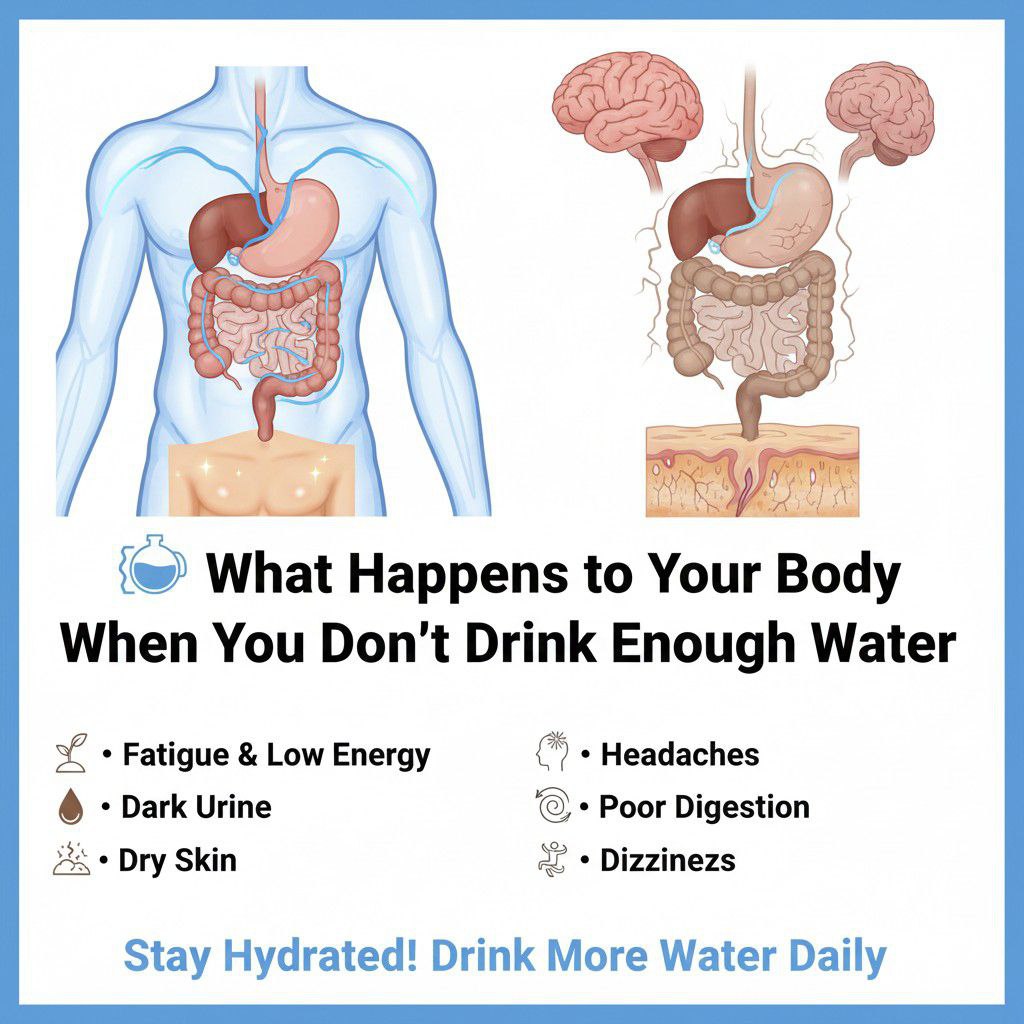
💧 Introduction: Water — The Fuel Your Body Can’t Live Without
Most people know water is essential. Yet many forget to drink enough throughout the day. Busy schedules, constant distractions, and habitually choosing coffee or soda often mean the body doesn’t receive the hydration it desperately needs.
You may think:
“I drink water… sometimes.”
But sometimes isn’t enough.
Your body is made of 60–70% water, and every cell, tissue, and organ depends on proper hydration to function.
When you don’t drink enough water, your body sends many warning signs—subtle at first, then more serious. Ignoring them can lead to long-term health issues, fatigue, digestion problems, dull skin, headaches, kidney stress, and more.
In this 1500+ word detailed guide, you’ll discover:
- What happens inside your body when you’re dehydrated
- Early and advanced symptoms of water deficiency
- How dehydration affects organs, skin, brain, digestion & mood
- Hidden signs most people ignore
- How much water you really need
- Tips to stay hydrated daily
Let’s dive into the science, symptoms, and simple solutions to protect your health.
🚱 What Really Happens Inside Your Body When You Don’t Drink Enough Water
When water intake is low, your body tries to compensate by pulling water from your cells, slowing metabolism, altering electrolyte balance, and reducing essential functions.
Here’s what happens step-by-step:
1️⃣ Your Brain Slows Down — Fog, Fatigue & Headaches
The brain is 75% water, so even mild dehydration can cause:
- Brain fog
- Difficulty concentrating
- Poor memory
- Slower reaction time
- Headaches or migraines
- Mood swings
- Irritability
Studies show that just 1–2% dehydration can negatively affect cognitive performance.
2️⃣ Your Skin Becomes Dry, Dull & Prone to Aging
Water hydrates skin cells, supports collagen, and keeps your complexion glowing.
When dehydrated:
- Skin loses elasticity
- Fine lines become visible
- Dry patches appear
- Dark circles worsen
- Lips crack
- Acne can flare due to excess oil production
No cream can replace water—hydration starts inside.
3️⃣ Your Kidneys Struggle to Function
Kidneys filter waste from your blood. Without adequate water:
- Urine becomes dark and concentrated
- Toxins accumulate
- Kidney stones can form
- Risk of UTIs increases
- Kidney function slows
Chronic dehydration forces kidneys to work harder, affecting long-term health.
4️⃣ Your Digestion Slows — Constipation & Bloating Begin
Water helps food move through your digestive tract.
Low hydration leads to:
- Constipation
- Hard stools
- Bloating
- Acid reflux
- Slow metabolism
The intestines pull water from waste, making stools dry and difficult to pass.
5️⃣ Your Heart Works Harder
Low water thickens blood slightly, making it harder to pump.
Symptoms may include:
- Heart palpitations
- Faster heartbeat
- Low blood pressure
- Dizziness
- Fatigue
Proper hydration is key for maintaining circulation and oxygen flow.
6️⃣ Your Muscles Cramp & Feel Weak
Water carries electrolytes like sodium, potassium, and magnesium.
Low water = electrolyte imbalance.
Results:
- Muscle cramps
- Spasms
- Weakness
- Reduced endurance
- Body aches
This is why athletes hydrate constantly.
7️⃣ Your Mouth & Eyes Become Dry
Water is essential for producing saliva and tears.
Signs include:
- Dry mouth
- Bad breath
- Burning eyes
- Gritty feeling in eyes
- Increased cavity risk
Dry mucous membranes also reduce immunity.
8️⃣ Your Mood Suffers
Surprisingly, hydration affects emotional balance.
Dehydration can cause:
- Anxiety
- Irritability
- Low motivation
- Stress sensitivity
- Emotional instability
Even mild dehydration affects neurotransmitters.
9️⃣ Your Body Temperature Becomes Harder to Control
Water regulates internal temperature through sweat.
Low water intake causes:
- Overheating
- Hot flashes
- Excessive sweating (body overcompensates)
- Fatigue in heat
This is why dehydration is dangerous in summer.
🔟 Hunger Increases & Weight Loss Slows
Your brain often confuses thirst with hunger.
Consequences:
- Increased cravings
- Unnecessary snacking
- Slower metabolism
- Body retains water (bloating)
Drinking water before meals can actually support weight loss.
🚨 Hidden Signs of Dehydration Most People Ignore
These symptoms are often overlooked but strongly indicate low water levels:
- Foul breath
- Cracked heels
- Dizziness when standing up
- Reduced urination
- Cold hands and feet
- Increased sugar cravings
- Persistent tiredness
- Trouble waking up in the morning
If you experience 2–3 of these regularly, you may be dehydrated.
💦 How Much Water Do You Really Need?
Most adults need 2–3 liters per day, depending on:
- Climate
- Activity level
- Health condition
- Diet (salty foods require more water)
- Body weight
A simple rule:
👉 Drink half your body weight in ounces.
Example:
If you weigh 160 lbs → drink 80 oz (2.3 liters)
Another easy test:
👉 Your urine should be light yellow.
Dark = dehydrated
Clear = hydrated
🧂 What About Electrolytes?
Water alone isn’t enough if you sweat heavily.
Electrolytes help maintain fluid balance.
Sources:
- Coconut water
- Lemon water + pinch of salt
- ORS solutions
- Mineral water
- Sports drinks (choose low sugar)
🥤 Best Times to Drink Water
To maximize hydration:
🕖 Morning
Drink 1–2 glasses immediately after waking.
🍽 Before Meals
Helps digestion & prevents overeating.
🏃 During Activity
Drink small amounts every 20–30 minutes.
🌙 Before Bed (Small Amount)
Prevents overnight dehydration.
🍋 Drinks That Count as Hydration
(Not all drinks are equal!)
Good choices:
- Water
- Coconut water
- Fruit-infused water
- Herbal tea
- Sparkling water
Drinks that dehydrate:
- Coffee
- Alcohol
- Energy drinks
- Soda
- Sugary juices
These should be consumed in moderation.
🧠 Tips to Stay Hydrated Every Day
Here are easy ways to increase your intake:
✔ Carry a water bottle everywhere
✔ Set hourly reminders
✔ Use apps to track water
✔ Add lemon or fruit slices for taste
✔ Eat water-rich foods (cucumber, watermelon, oranges)
✔ Drink 1 glass before every meal
✔ Replace soda with infused water
Consistency is key
⚠️ Who Is at Higher Risk of Dehydration?
Some people need to be extra careful:
- Children
- Athletes
- Older adults
- Pregnant women
- Outdoor workers
- People taking diuretics
- People with kidney issues
Their bodies lose water faster or don’t detect thirst quickly.
🏥 When Dehydration Becomes Dangerous
Severe dehydration can lead to:
- Heatstroke
- Confusion
- Rapid heartbeat
- Fainting
- Organ stress
- Kidney failure
- Seizures
Seek medical attention if dehydration symptoms persist.
🏁 Conclusion: Water Is the Simplest Way to Protect Your Health
Not drinking enough water affects your body from head to toe—brain function, mood, digestion, skin, immunity, heart health, and energy levels.
The good news?
Hydration is one of the easiest health habits to fix.
Drink consistently.
Listen to your body.
Choose water over sugary drinks.
Carry a bottle everywhere.
Small steps can transform your energy, appearance, and overall wellness.
Your body will thank you for every sip you take. 💧