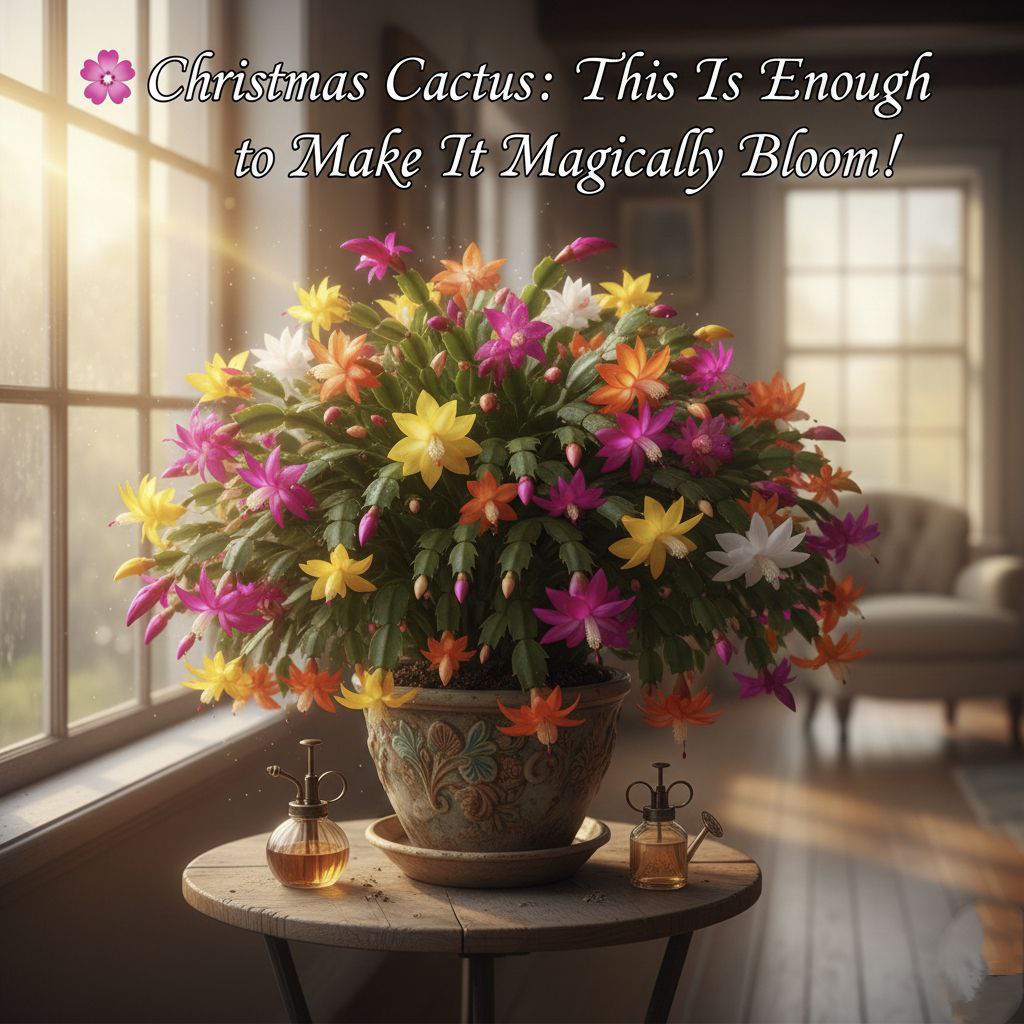
🎄 Introduction: The Secret Behind the Holiday Bloom
Few houseplants bring as much joy during the holiday season as the Christmas Cactus. When those bright pink, red, or white blooms cascade gracefully from its segmented stems, the whole home feels festive, warm and alive.
But here’s the truth:
Many people struggle year after year because their Christmas cactus refuses to bloom.
No buds.
No flowers.
Just green segments hanging sadly.
If you’ve ever wondered:
❓ “Why won’t my Christmas cactus bloom?”
❓ “What am I doing wrong?”
❓ “How do I trigger those magical holiday flowers?”
—this guide is for you.
Christmas Cactus blooming is not difficult, but it does require understanding a few scientific secrets. Once you follow them correctly, your plant will reward you with explosive blooms, often more than once a year!
In this detailed guide, you’ll learn:
- Why your Christmas cactus isn’t blooming
- How light, temperature, and watering affect flowering
- The exact blooming-trigger formula
- Step-by-step secret to force buds
- Tips to prevent bud drop
- The ideal soil, pot, and fertilizer
- Seasonal care calendar
- How to keep it blooming year after year
Let’s uncover the magic behind this stunning holiday plant.
🌱 What Makes the Christmas Cactus Different?
The Christmas cactus (Schlumbergera bridgesii) isn’t a desert cactus.
It’s a tropical forest cactus from Brazil.
That means:
- It grows in cool, humid forest regions
- It blooms in response to light cycles
- It requires regular watering
- It prefers indirect light, not harsh sun
- It reacts strongly to temperature changes
Understanding this is the first step toward helping it bloom.
🎯 Why Your Christmas Cactus Isn’t Blooming
Before revealing how to trigger blooms, let’s understand the most common issues:
❌ Too much light
Christmas cactus needs long nights to develop buds.
❌ Temperature too warm
Warm indoor temps prevent bud formation.
❌ Incorrect watering
Too much or too little water disrupts the blooming cycle.
❌ Wrong soil
Heavy soil suffocates roots and delays flowering.
❌ Too much fertilizer
Leafy growth increases, but flower growth decreases.
❌ Not enough darkness
This plant needs 12–14 hours of complete darkness for several weeks.
Once you avoid these mistakes, the magic begins.
✨ The Magic Formula: How to Make Your Christmas Cactus Bloom
Here’s the simple but powerful formula:
🌙 1. Give It 12–14 Hours of Darkness Daily
Christmas cactus is a short-day plant.
It only forms buds when nights are long enough.
For 3–6 weeks:
- Place it in a dark room
- OR cover with a cardboard box
- OR place inside a closet from 6 PM–8 AM
No lamps. No TV. No light leaks.
Darkness triggers its blooming hormones.
❄️ 2. Keep Temperature Between 50–60°F (10–15°C)
Cool temperatures signal the plant that the “rainy season + winter lighting” has arrived—its natural blooming time.
You can place it:
- Near a cool window
- In a porch room
- In a less-heated bedroom
- In a garage window (not freezing!)
Warm rooms = no buds.
💧 3. Water Less During Pre-Bloom Stage
Overwatering during bud formation is a common reason buds fall off.
Follow this rule:
- Water lightly when the top 1–2 inches of soil feel dry
- Do NOT let the plant sit in water
- During darkness cycle, keep water minimal
Once buds appear → resume regular watering.
🌤️ 4. Give Bright Light (After Buds Form)
Once flowers begin forming, brightness is your best friend.
Move the plant to:
- A bright east-facing window
- Filtered sunlight
- Indirect light for 6–8 hours daily
Never put under harsh direct sun—it burns segments.
🪴 5. Use the Right Soil & Pot
Christmas cactus prefers:
- Light, airy soil
- Orchid mix + potting soil blend
- Good drainage
Ideal pot:
- Slightly tight pot (blooms better when root-bound)
- Drainage holes required
- Terracotta optional but not necessary
Re-pot only every 2–3 years, right after blooming season.
🌸 6. Stop Fertilizing Before Bloom Season
Overfeeding encourages green growth but reduces flowers.
Fertilizer schedule:
- Feed monthly from spring → early fall
- Stop feeding in October
- Resume after blooming
🌺 Step-by-Step Blooming Schedule (Month-by-Month Guide)
📅 January–March
After blooming season
- Light pruning
- Keep in bright light
- Normal indoor temperature
- Light watering
📅 April–August
Growth season
- Fertilize monthly
- Regular watering
- Repot ONLY if necessary
📅 September (Bloom Trigger Starts)
- Reduce watering
- Lower temperature
- Increase shade
📅 October–November (Critical Stage)
Darkness routine begins:
- 12–14 hours darkness
- 8–12 hours light
- Cool temperature
- Minimal watering
Buds will begin forming around weeks 3–6.
📅 December
Move to display area
- Bright indirect sunlight
- Resume regular watering
- Enjoy blooms for 4–6 weeks
You can repeat a similar process for an Easter bloom too.
🌸 How to Prevent Bud Drop
Even if buds form, they can fall off. Here’s how to prevent it:
✔ Keep Temperature Stable
No sudden drafts or heaters.
✔ Avoid Moving the Plant
Rotation or relocation stresses the cactus during blooming.
✔ Keep Soil Moist — Not Wet
Let dry slightly between waterings.
✔ Avoid Direct Heat
Keep away from:
- Radiators
- Ovens
- Fireplaces
- Very warm windowsills
✔ Avoid Sudden Light Changes
Going from darkness → bright light instantly may cause bud drop.
💡 Bonus Tricks to Boost Blooms
These expert tricks can increase flower count:
✔ Light Pruning
Removing a few segments in spring increases branching → more blooms later.
✔ Magnesium Boost
Add 1 tsp Epsom salt per gallon of water
Use once per month (April–September only).
✔ Bloom Booster Fertilizer
Use a fertilizer with higher phosphorus (P)
But stop fertilizing after October.
✔ Cool Night Draft
A slightly cracked window during cool nights helps bud formation.
🌿 Is Christmas Cactus Toxic?
Good news:
- ✔ Non-toxic to pets
- ✔ Non-toxic to humans
- ✔ Safe plant for households
Some people confuse it with desert cactus—this one is friendly!
🪴 How to Propagate Christmas Cactus (Easy!)
Propagation ensures you always have backup plants.
Steps:
- Twist off 2–3 segments
- Let cut edge dry for 24 hours
- Insert in moist potting mix
- Keep in bright, indirect light
- Water only lightly
- Roots appear in 2–4 weeks
These newborn plants will bloom beautifully next season.
🌼 Why Christmas Cactus Is the Perfect Holiday Plant
- Low maintenance
- Long-lived (many survive 20–40 years!)
- Can bloom 2–3 times a year
- Sentimental value—often passed down generations
- Stunning flower colors: pink, red, purple, white, salmon
Most importantly:
With just a little darkness, cool air, and care…
it becomes a magical holiday centerpiece.
🏁 Conclusion: Yes, You CAN Make It Bloom!
Your Christmas cactus isn’t difficult—it just needs the right signals from you.
Follow the blooming formula:
🌙 Long nights
❄️ Cool temperatures
💧 Water control
🌤️ Bright light after buds
🪴 Right soil & pot
Do this consistently and you’ll see buds forming like magic.
The morning you walk into your living room and find your cactus covered in glowing, colorful blooms—you’ll feel the same joy gardeners have felt for decades.
Your Christmas cactus will no longer just survive…
It will truly shine.