🌤️ Introduction: A Morning I’ll Never Forget
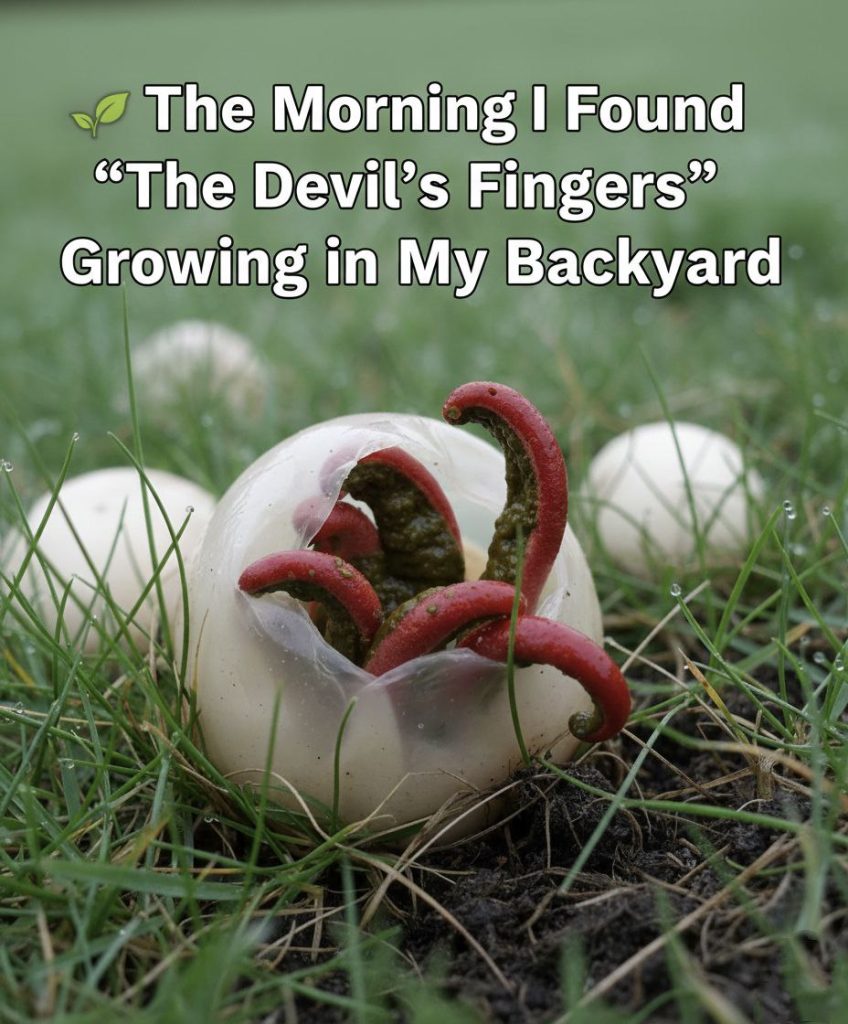
Some mornings begin like any other—coffee, sunlight, maybe the sound of birds outside. But the morning I stepped into my backyard and saw bright red, tentacle-like arms bursting out of the soil, my heart nearly stopped.
It looked like something from a science-fiction movie…
Or a creature trying to claw itself out of the ground.
Or, as it’s commonly called, “The Devil’s Fingers.”
If you’ve ever come across this strange fungus, you already know how shocking it looks. And if you haven’t—this guide will prepare you for the day you might see it. Because despite the horrifying appearance, this fungus is real, harmless to humans, and surprisingly fascinating.
In this detailed article, you’ll learn:
- What Devil’s Fingers really is
- Why it grows in backyards
- Whether it’s poisonous or dangerous
- How to identify and remove it
- Why it smells so bad
- The full life cycle of this bizarre fungus
- Tips to keep fungi under control in your garden
- What to do if you find one
Let’s investigate the morning horror that turned into one of the most fascinating discoveries of my gardening life.
👀 The Shock: A Red, Tentacled Creature in the Yard
Imagine: you walk outside, expecting to see grass and flowers… and instead you see something like:
- A red octopus pushing out of the dirt
- A clawed alien organism
- A star-shaped fleshy mass with black slime
- Tentacles spreading as if alive
When I first saw it, I stepped back. I had no idea whether to run, call pest control, or take a picture.
The fungus looked unreal. Its bright red fingers, covered with patches of dark, sticky slime, spread outward like a hand reaching from underground. The smell—yes, the smell—hit next: rotting meat.
I later learned I had come face-to-face with one of the most bizarre fungi on Earth:
Clathrus archeri, commonly known as:
- Devil’s Fingers
- Octopus Stinkhorn
- Monster Mushroom
- Alien Fungus
And its story is even stranger than its appearance.
🍄 What Is the Devil’s Fingers Fungus?
The Devil’s Fingers fungus (Clathrus archeri) is a species of stinkhorn mushroom native to Australia and New Zealand but now found worldwide.
⭐ Key characteristics:
- Bright red tentacle-like arms
- Starts inside an “egg”
- Releases a foul odor
- Attracts flies for spore distribution
- Often appears suddenly after rain
- Grows in mulch, lawns, gardens, and compost
This fungus doesn’t sprout like normal mushrooms. Instead, it erupts dramatically from a white, gelatinous egg, then spreads its red “arms” outward.
🥚 The Life Cycle: From Egg to Monster
Before the tentacles appear, Devil’s Fingers begins as a soft white or pink egg, about the size of a small lemon.
Stage 1 — The Egg
Buried partially in soil or mulch
Soft, slightly rubbery, jelly-like interior
Harmless looking—almost pretty
Stage 2 — The Burst
Suddenly, sometimes overnight, the egg splits open.
What emerges looks like a red octopus or demonic starfish.
The arms unfold and stretch outward. On top of them lies a dark green-black slime called gleba.
Stage 3 — The Smell
To humans, the smell is terrible—rotting flesh or a dead animal.
But to flies, it’s irresistible.
Stage 4 — The Spread
Flies land on the slime, get spores stuck to their feet, and carry them across your yard or neighborhood.
This is why the fungus spreads so quickly.
👃 Why Does It Smell Like Rotting Meat?
The fungus doesn’t smell bad by accident—it smells bad on purpose.
Most mushrooms rely on wind to carry their spores.
Devil’s Fingers relies on flies.
The foul odor mimics the smell of decomposition. The flies believe there’s something dead to eat, land on the fungus, and unknowingly help it reproduce.
⚠️ Is Devil’s Fingers Dangerous or Poisonous?
Here’s the important part:
✔ SAFE for humans
- Not poisonous to touch
- Not harmful to pets
- Not dangerous to gardens
- Not toxic to soil
✘ NOT edible
Although it isn’t poisonous, the fungus is not meant to be eaten. The odor and texture alone make it very unpleasant.
✔ Safe for the environment
In fact, Devil’s Fingers helps break down organic matter in soil.
So, while it looks terrifying, it’s harmless and part of your backyard’s natural ecosystem.
🧭 Why Did It Appear in My Backyard?
Devil’s Fingers tends to show up in places with:
✔ Lots of moisture
After heavy rain
In humid climates
Watered lawns or gardens
✔ Mulch or wood chips
Landscaping bark
Compost
Old stumps or wood debris
✔ Rich organic soil
Decaying roots
Leaf litter
Rotten wood
If your yard has any of these conditions, the fungus may appear unexpectedly.
It especially loves fresh mulch—many people notice Devil’s Fingers a few months after adding new landscaping materials.
🛠️ Should I Remove It? How?
You don’t need to remove it unless you dislike the smell or appearance.
But if you want to remove it, here’s the safe method:
✔ How to Remove Devil’s Fingers
- Wear gloves (because of the smell, not danger)
- Pull up the fungus by the base
- Dig out the attached white “egg,” if visible
- Place in a sealed bag to trap the odor
- Dispose in the trash (do NOT compost)
- Rake the area lightly
- Optional: remove excess mulch or debris
Important
Removing them does not prevent them from coming back. The spores may already be in your yard.
To reduce future growth:
- Improve drainage
- Reduce constant moisture
- Turn mulch regularly
- Remove decaying wood or roots
🧪 Identifying Devil’s Fingers vs Dangerous Fungi
It’s helpful to know what Devil’s Fingers is not:
❌ NOT a poisonous death cap
Death caps look like traditional mushrooms with caps and stems.
❌ NOT a toxic amanita
Amanitas have white gills, caps, spots—not tentacles.
❌ NOT a mold or disease
Devil’s Fingers does not infect plants, pets, or soil.
✔ It is a stinkhorn fungus
All stinkhorns share:
- Bad smell
- Slime on top
- Strange shapes
- Sudden growth
🌿 How Common Is It?
Devil’s Fingers is rare enough to shock people who see it, but common enough to appear in:
- North America
- Europe
- Asia
- Australia & New Zealand
- South Africa
Its spread is mostly the result of:
- Imported mulch
- Gardening soil
- Landscaping materials
- Birds & insects helping spores spread
So if you’ve seen it once, you’re not alone.
📸 Why People Photograph It
Even though it looks scary, Devil’s Fingers is one of the world’s most photographed fungi.
Reasons:
- It’s incredibly unusual
- It looks like a creature, not a plant
- Bright red color is eye-catching
- Social media loves weird fungi
- Mushroom hunters enjoy documenting rare finds
If you found this fungus in your backyard, you’re part of a global club of surprised homeowners.
🧰 Tips for Gardeners: Preventing Fungus Growth
Although harmless, you may want fewer fungi in general.
✔ Reduce excessive moisture
Fix drainage, avoid over-watering.
✔ Stir mulch regularly
Breaks up fungus habitats.
✔ Remove decaying organic matter
Old roots, logs, sticks, excess leaves.
✔ Improve airflow
Trim bushes, reduce shaded overly-wet areas.
✔ Avoid overwatering lawns
Wet conditions encourage fungi of all types.
🌍 Cultural Myths & Folklore
Because of its bizarre appearance, Devil’s Fingers has inspired myths:
- Some believe it’s a “sign” of bad luck
- Others call it “the Devil’s hand reaching from the soil”
- In some cultures, it is admired as a rare natural spectacle
- In Australia, hikers refer to it as the “octopus stinkhorn”
Most myths come from its dramatic arrival and strong odor.
🏁 Conclusion: Shocking at First, Fascinating Later
Finding Devil’s Fingers in your backyard is unforgettable. The sight is startling—bright red tentacles exploding from the earth, the smell of rot drifting through the air. But once the initial shock passes, the fungus becomes fascinating rather than frightening.
You now know:
- It’s harmless
- It’s not poisonous
- It’s part of nature’s decomposition cycle
- It appears in moist, organic-rich soils
- It can be removed easily if you wish
- It is rare, unusual, and oddly beautiful
So if you ever wake up and find Devil’s Fingers growing in your yard…
Take a photo, take a breath (maybe not too deep!), and appreciate the strange, surprising beauty of the natural world.