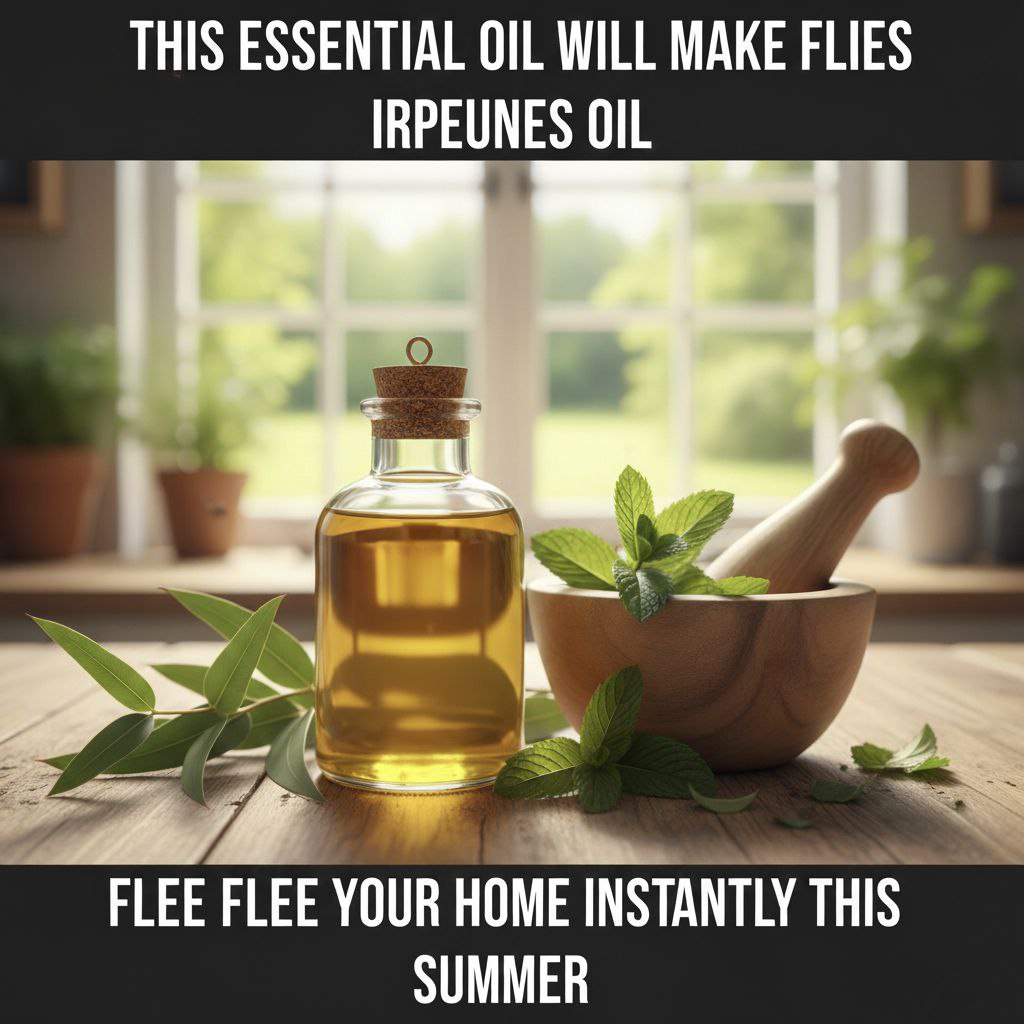
🪰 Introduction: The Summer Buzz We All Want to Stop
Summer means sunshine, backyard barbecues, fresh breezes—and flies. There’s nothing more irritating than flies buzzing at your food, landing on surfaces or simply refusing to leave. We reach for sprays or traps, but what if there were a natural, effective, easy-to-apply solution that uses a single essential oil—one that can have flies fleeing your home in no time?
In this article, I’ll walk you through:
- Why flies invade homes (and what they really dislike)
- The essential oil that works particularly well this summer
- How to prepare DIY sprays and diffusers with that oil
- Step-by-step application tips for indoor & outdoor use
- What the research says about essential oils repelling flies
- Safety notes, what to avoid, and simple lifestyle tweaks to help reduce flies overall
Let’s get your home fly-free—and it’s simpler than you think.
🔍 Why Flies Are So Persistent—and What Repels Them
Why Flies Are Everywhere in Summer
- Flies are attracted to food, waste, sticky surfaces, warmth and humidity.
- Open windows, uncovered food, damp spots and trash cans are fly magnets.
- Rather than just killing flies, repelling them is a smarter long-term approach—they hate strong smells and certain chemicals.
What Flies Hate
Flies detect smells constantly—some aromatic compounds irritate or confuse their olfactory systems, making them avoid the area. For example:
- Essential oils containing linalool, limonene, menthol, eugenol have been shown to repel flies and other insects.
- A recent scientific study in Chile found that essential oils of lemon (Citrus × limon), cinnamon (Cinnamomum zeylanicum) and peppermint (Mentha × piperita) showed strong repellent activity against house flies.
So, the trick is: pick the right oil, apply it effectively, and you’ll create a zone flies avoid.
✅ The Star Essential Oil: Lemon (Citrus × limon)
Multiple studies highlight lemon essential oil as one of the most effective and accessible options:
- A lab study found lemon oil had a LC₅₀ (lethal concentration) of around 2.5 µL mL⁻¹ for adult house flies in contact toxicity.
- An article from a home-manual site notes lemon and citrus scents irritate flies’ smell receptors and are therefore highly recommended for indoor fly control.
Why Lemon Oil Works So Well
- Rich in limonene (volatile terpene) which flies dislike.
- Pleasant scent for humans, so it’s multi-purpose (good smell + pest control).
- Readily available and safe when used correctly.
Hence, lemon essential oil can be your go-to for fly control this summer.
🛠️ Step-by-Step: How to Use Lemon Essential Oil to Repel Flies
What You’ll Need
- Lemon essential oil (100% pure, food-grade or aromatherapy grade)
- Clean spray bottle (250–500 mL)
- Distilled or filtered water
- A few drops of dish soap (optional, to help oil mix with water)
- Diffuser (optional, for indoor use)
DIY Fly-Repellent Spray Recipe
- Take a 250 mL spray bottle.
- Fill with about 230 mL filtered water.
- Add 15–20 drops lemon essential oil.
- Optional: add ½ teaspoon of mild dish soap (helps oil disperse).
- Shake well to mix.
- Label the bottle (“Fly-Repel Lemon”).
How to Apply
- Spray around door frames, window sills, trash cans, kitchen counters, outdoor seating areas.
- For indoor use: lightly mist the air, but avoid direct contact with food surfaces or open plates.
- For outdoor seating: spray before your guests arrive, re-apply every 3–4 hours in hot weather.
- Use a diffuser inside at low setting with 3–5 drops of lemon oil for continuous repellent effect.
Frequency & Timing
- Apply early evening when flies start gathering.
- Re-apply morning & afternoon if the area is high traffic or humid.
- Use spray + diffuser combination for best effect.
Troubleshooting & Tips
- If oil separates: shake the bottle before every use.
- If scent is too strong: reduce to 10–12 drops and re-test.
- If you have pets: test in a small corner first—some animals may dislike strong citrus scents.
- Keep food covered for at least 30 minutes after spraying.
📋 Table: Best Spots & Application Guide
| Location | Application Method | Why It Works |
|---|---|---|
| Kitchen counters | Spray bottle 15 drops, wipe corners | Food attracts flies |
| Trash can lids | Spray underside/lid, every 2-3 hours | Damp/waste areas attract flies |
| Window/door frames | Spray along frame edges & hinges | Entry point for flying insects |
| Outdoor seating (patio) | Spray chairs/tables & use diffuser nearby | Major gathering zone for flies |
| Indoor living room | Diffuser 3 drops lemon oil, 30 mins session | General repellent in common areas |
🎯 Research & Evidence: What the Studies Say
Key Studies
- Khater & Geden (2019) tested essential oils like vetiver, cinnamon, lavender against house flies. While adults weren’t always repelled strongly, the contact/fumigant toxicity was high.
- Villanueva-Pereira et al. (2025) found lemon, cinnamon and peppermint essential oils had strong repellent effects against Musca domestica (house fly) larvae and adults in lab conditions.
- Home-manual and lifestyle sources list lemon, lavender, peppermint as effective aromatic repellents for indoor settings.
What That Means for You
- Lab conditions are controlled; home environments vary (airflow, humidity, open doors, food). So while lemon oil is promising, real-world effect may vary.
- It’s best as part of an integrated approach: good hygiene + covered food + waste management + essential oil treatment.
- Safe and accessible enough for home use, unlike many chemical sprays.
🔧 Additional Natural Essential Oils for Fly Control
If you want to diversify or use multiple oils, consider these:
- Peppermint oil: Menthol and pulegone content help repel flies.
- Lavender oil: Linalool component is disliked by flies; good indoor scent.
- Citronella oil: Long used for repelling insects including flies & mosquitoes.
- Cinnamon oil: Warm spicy scent flies avoid; good for indoor use especially in cooler months.
You can mix two oils (e.g., lemon + peppermint) at about 10 drops each for a synergistic effect.
🧼 Lifestyle & Environmental Habits to Support Your Oil-Based Strategy
While the essential oil works wonders, pairing it with good habits gives you the best results:
- Cover all food when outdoors, don’t leave open plates.
- Clean trash bins regularly, rinse containers, avoid standing water.
- Ensure window/door screens are intact.
- Keep indoor surfaces dry—flies breed in damp, dirty, sticky spots.
- Avoid sugary spills—flies are drawn quickly to sticky sweets.
- Use fly traps or sticky sheets near entries as backup if needed.
⚠️ Safety & Precautions
- Always perform a patch test if diffusing or spraying in enclosed indoor areas. Some people/pets may react to citrus oils.
- If you have pets or small children, use minimal drops and ensure good ventilation. Citrus oils can affect certain animals.
- Keep spray away from direct food contact—wait at least 10-15 minutes after spraying before un-covering dishes.
- Avoid applying oil directly to skin for fly-repellent purposes without dilution—essential oils are potent.
- Essential oils are not a substitute for medical pest control if you have a serious infestation.
🏁 Conclusion: Make This Your Summer Fly-Free Secret
When summer heat, outdoor meals and family gatherings roll in, flies can become a nuisance—but they don’t have to be. With a simple, natural tool like lemon essential oil, used wisely, you can reclaim your space.
Here’s your game plan:
- Choose quality lemon essential oil.
- Prepare your DIY spray and apply as directed.
- Combine with good hygiene and home-maintenance habits.
- Keep alternative oils (peppermint, citronella) on hand to mix things up.
- Enjoy a fresher, fly-less home.
Summer should be about fun — not swatting flies. This year, let an essential oil do the heavy lifting for you.