Introduction
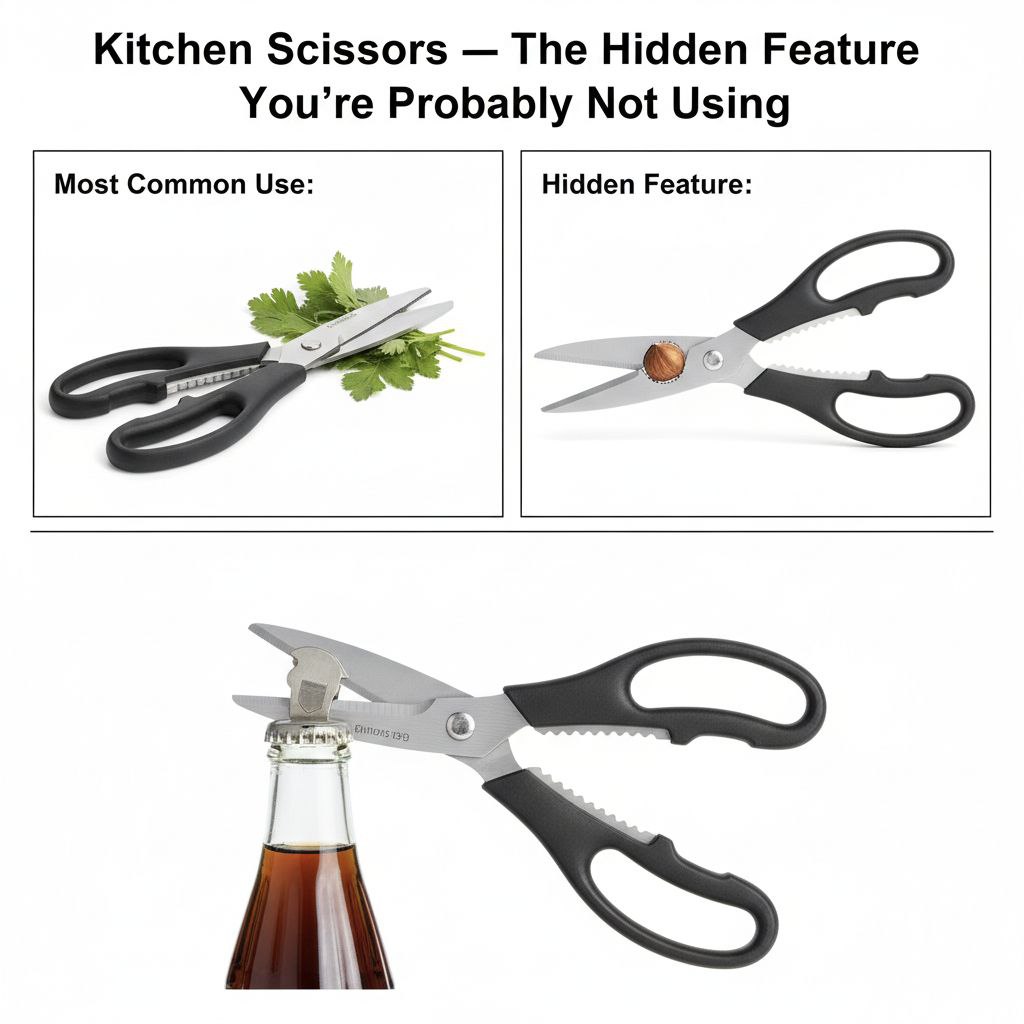
When you first bought your kitchen scissors, you probably saw them as just one more tool for cutting herbs, packaging or trimming meat. But what if I told you there’s a little-noticed feature on many pairs of kitchen scissors that can transform them into a genuine multitool in your kitchen? One that opens jars, cracks nuts, and gives you better grip on tricky items.
In this post we’ll uncover what that hidden feature is, why it exists, how to use it properly (and safely), what tasks it can simplify, and how to choose the right kitchen scissors so you actually use this feature. Let’s get into the details.
What Is That Metal Teeth or Groove Between the Handles?
If you look at most modern kitchen scissors there’s often a serrated or toothed section near the pivot or between the handles. These “metal teeth” or grooves are often overlooked but serve real purposes. According to design-explanations:
- They’re not merely decorative—they’re intentional serrations or ridges for gripping.
- They’re sometimes called a “nut-cracker” notch, “jar-lid gripper” or “bone notch” depending on the model.
- The feature enhances functionality beyond just cutting.
Here’s a table summarizing what this feature is and what it’s for:
| Feature | Location | Primary Function |
|---|---|---|
| Serrated / ridged section | Between blades or inside handle | Grip slippery items, crack shells, open sealed jar lids |
| Notch or “bone-breaker” groove | Near the pivot or handle join | Provide leverage for tougher tasks |
| Jar-lid / bottle cap gripper | At handle curves | Give traction when twisting open lids or caps |
Why This Feature Adds Real Value in the Kitchen
1. Better Grip on Slippery or Hard-to-Handle Items
When you’re cutting raw chicken skin, opening a sauce bottle or dealing with packaging, slippery surfaces make the task harder. The ridged section of kitchen scissors gives better traction and prevents slip-out whilst you cut or twist.
2. Multi-functional Use – Saves Drawer Space
With this built-in feature, your kitchen scissors can serve as:
- Nut cracker (for walnuts, pecans)
- Jar lid opener
- Bottle cap opener
- Minor bone cutter or shell-cracker in some models
This reduces the need for separate tools and simplifies meal prep.
3. Built for Tough Jobs
High-quality kitchen scissors differ from ordinary office scissors. They often include serrations, extra leverage, and materials suited to food prep. The “metal teeth” section helps with tougher materials (fibrous stems, small bones, packaging) rather than just simple slicing.
Step-by-Step: How to Use the Hidden Feature Properly
To make the most of this “hidden” part of your kitchen scissors, follow these steps:
Step 1 – Inspect Your Scissors
- Look between the handles or near the pivot point and find the grooved or serrated section.
- Ensure the scissors are rated for kitchen use (food-safe stainless steel, sturdy hinge).
Step 2 – Use for Jar or Bottle Opening
- Open the scissors slightly so the grooves are visible.
- Set the jar lid or bottle cap into the serrated section between the handles.
- Hold the jar with one hand, grip with the serration section, then twist the lid with the other hand.
- The teeth provide grip and leverage, making stubborn lids easier to open.
Step 3 – Cracking Nuts or Shells
- Place a walnut, pecan or similar shell-nut into the groove section.
- Gently squeeze the handles together until the shell cracks—don’t crush so hard you destroy the nut.
- Remove shell pieces and enjoy the nut.
This method works in a pinch if you don’t have a dedicated nutcracker.
Step 4 – Cutting Tough Materials
- For poultry bones, fibrous stems or tough packaging—use the serrated jaws to grip the material, then cut or apply pressure.
- The groove gives a non-slip anchor so you’re not forcing the blades blindly. Useful for heavy duty kitchen missions.
Step 5 – Maintain and Clean
- Since this section may collect debris (shell fragments, sticky lid residue), take time to clean it after use—wash and dry thoroughly.
- Avoid using very low quality scissors for these tasks—overuse can damage the hinge or blades.
Common Mistakes & What to Avoid
- Using the feature on delicate or soft fabrics/foods: The serrated groove is good for hard things—avoid using it on delicate packaging or soft foods where damage or slip may occur.
- Assuming all kitchen scissors have such a feature: Many cheaper models still lack it; inspect your model.
- Over-cranking jar lids without proper grip: Remember the jar must be held firmly; the scissors only assist. Slipping can cause injury.
- Using the groove for unintended tasks (like severe bone cutting) in low-quality scissors: If your scissors aren’t designed for bone, you risk damaging them. Always check specification.
Why This Matters: Real Life Kitchen Wins
- Stubborn jam jar lids? That groove means you open it without sliding towels or getting frustrated.
- Nuts for baking or snacking? Crack them in seconds without a separate tool.
- Busy weeknight dinner: trim chicken, strip herbs, open packaging and crack shells—all with one pair of scissors.
- Less clutter: fewer gadgets in your drawer if your scissors can do more.
These are small conveniences—but they add up in your daily kitchen workflow.
Choosing the Right Kitchen Scissors for Full Utility
When buying kitchen scissors with these hidden features in mind, consider:
- Material: Prefer stainless steel, food-safe finish, corrosion-resistant.
- Handle ergonomics: Comfortable grip, non-slip surface, good fit for your hand.
- Presence of the groove/notch: Verify the serrated section is present and matches tasks you’ll use it for.
- Overall build & hinge: Heavy-duty is better if you’ll use tough functions (nut cracking, small bones).
- Ease of cleaning: Ideally separable blades or easy access to grooves.
- Reviews: Check if users highlight the extra features (not just cutting).
Summary & Final Thoughts
That little grooved or toothed section on your kitchen scissors? It’s not just decorative—it’s a hidden multitool waiting to be used. Whether cracking a nut, opening a tight jar, trimming tough packaging or handling a bone or shell—this feature brings unexpected value to your kitchen.
Next time you reach for your scissors, pause and notice: yes, you can just cut—but you can also grip, crack, open. Unlocking that feature makes your daily cooking smoother, faster and smarter.
So grab those kitchen shears with confidence—your hidden tool has revealed itself. Snip, squeeze, twist—and enjoy the little kitchen win.