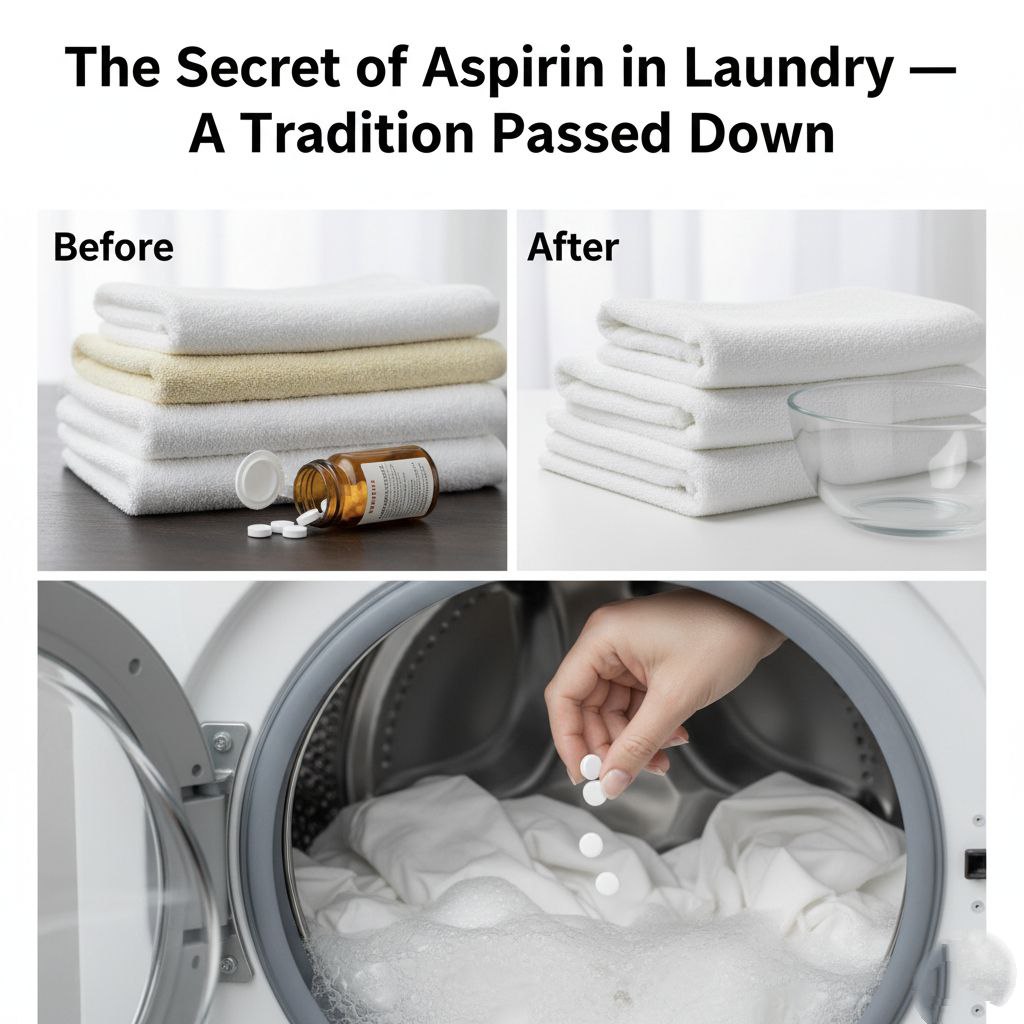
🧺 Introduction: A Medicine Cabinet Hack That Escapes Notice
You’ve probably got a bottle of aspirin in your medicine cabinet. But did you know that this everyday pain-relief tablet also holds a surprising laundry secret? Passed down through family traditions and household tips, using aspirin in laundry is gaining renewed attention as a eco-friendly, budget-wise way to brighten whites, tackle stains and refresh fabrics.
In this post we’ll explore what aspirin actually does in the wash, how reliable the hack is, how to use it step-by-step, what types of fabric it works best on (and when to skip), and why you should treat it as a helpful tool — not a miracle cure.
🔍 Why Aspirin Works (And What the Research Shows)
What Aspirin Contains
Aspirin (acetylsalicylic acid) breaks down into salicylic acid and acetic acid when exposed to water. Salicylic acid has mild exfoliating effects on skin, but in laundry it’s believed to help loosen grime or boost white-fabric brightness.
The Cleaning Claims
- Household experiments and cleaning-hacks websites say that crushing 3-5 aspirin tablets in hot water and soaking white garments can reduce yellowing and refresh mattresses or sheets.
- Laundry experts argue the acetylsalicylic acid “helps break down stains, brighten whites and even tackle mildew spores.”
What Research & Skepticism Say
- Some credible home-care sites caution that aspirin does not truly bleach fabrics like strong commercial bleaches do. The chemical reaction is weaker.
- That means while aspirin can help, it should be considered a support tool rather than a full substitute for strong whitening products.
🛠️ How to Use the Aspirin Laundry Hack — Step-by-Step
What You’ll Need
- Plain (uncoated) aspirin tablets — 3-6 tablets depending on load size
- Hot or warm water for soaking
- Your usual detergent or a gentle wash cycle
- White garments or fabrics (whites or very light colours)
Instructions
- Sort Laundry: Separate whites or very light garments from coloured clothes.
- Crush the Tablets: Use a mortar/pestle or roll in a cloth and crush until powdery.
- Prepare Soak Solution: Fill a bucket or bathtub with hot/lukewarm water. Add the crushed aspirin tablets and stir until dissolved. (Example: 4 litres of water + 5 tablets for a modest load)
- Soak Garments: Submerge your white clothes in the aspirin solution for 2 hours or overnight for tough yellowing.
- Wash as Usual: After soaking, transfer garments to your washing machine and run your normal wash cycle with detergent.
- Optional Spot-Treatment: For stubborn stains, apply crushed aspirin directly to the area with a few drops of water, wait 2 hours then launder.
- Dry & Inspect: Hang or machine-dry according to care label and inspect brightness. Avoid fabric softeners if you’re aiming for max brightness, as they may leave residues.
Pro Tips
- Use hot water if fabric permits—heat helps dissolution and stain-loosening.
- For mildew-smelling towels or fabrics, soak with aspirin plus a splash of white vinegar (if safe for fabric).
- Check fabric care labels: doesn’t suit all materials (e.g., delicate silks, wool, or coloured items).
- Use this trick as occasional booster — not every week, to protect fabric longevity.
📋 Quick Comparison Table: When to Use & When to Skip
| Scenario | Good Use of Aspirin Hack | Skip or Use Alternative |
|---|---|---|
| White cotton shirts that yellow | ✅ Soak with aspirin + hot water | — |
| White sheets with greyness | ✅ Overnight aspirin soak | — |
| Coloured garments or delicate fabrics | ❌ Risk of damage or colour loss | Use colour-safe brightener |
| Multi-stain problem (wine/grease) | ⚠️ May help but not substitute | Use targeted stain remover |
| Routine weekly laundry | ⚠️ Occasional booster only | Use as occasional method |
✅ Benefits You’ll Notice
- Whites may appear sharper and brighter—especially garments that look dull or yellowed.
- Odours from mildew or sweat may reduce due to aspirin’s mild antimicrobial effect.
- A cheaper and gentler alternative to bleach for households avoiding harsh chemicals.
- Provides a simple household ritual passed down through generations—connecting you to tradition.
⚠️ Warnings & What to Be Realistic About
- Aspirin is not a substitute for bleach when heavy whitening or colour-removal is involved. It works mildly.
- Overuse or incorrect use may damage fabric finishes or cause wear.
- Do a patch test if you’re uncertain about fabric reaction.
- Not recommended for fabrics labelled “dry‐clean only”.
- Always read fabric care labels—some materials cannot tolerate hot water or soaking.
- If you have skin sensitivity, remember you’ll be handling crushed aspirin—wash hands after.
📅 How to Make This Part of Your Laundry Routine
- Quarterly booster: Every 3-4 months, use the aspirin soak for your white load (e.g., bed-sheets, pillowcases, white tops) to refresh brightness.
- Spot treatment as needed: For yellow sweat-marks or mildew-smell fabrics, use targeted aspirin paste.
- Important baseline care: Continue regular laundry practices—sort by colour, use appropriate detergent, avoid over-drying, protect whites from sun-damage.
🌟 Final Thoughts: A Small Tablet, Big Laundry Boost
Who would have thought that a pain-relief tablet could pull a starring role in your laundry room? Using aspirin in laundry isn’t magic—but when used correctly, it offers a gentle, economical way to refresh whites and manage stubborn fabric issues.
Consider it a household tradition worth trying: passed down, simple to do, and surprisingly effective for the right fabrics. With the right load, correct method and realistic expectations, the aspirin laundry hack may just become one of your favourite laundry tools.
So next time your whites look dull or your sheets have lost their crispness, remember: maybe the secret’s already in your medicine cabinet. Happy washing!