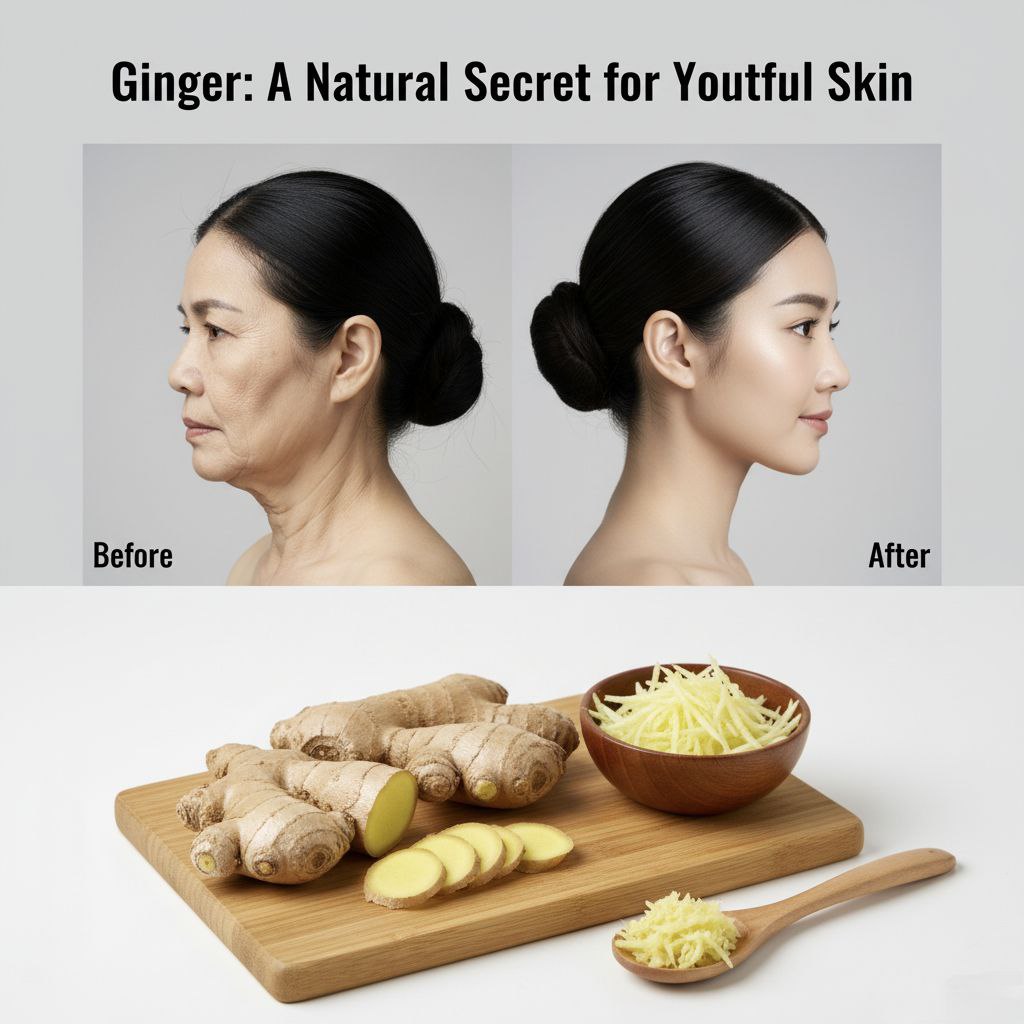
🌿 Introduction: The Spice That’s More Than Just Flavor
When you think of anti-ageing skin care, your mind might jump to serums, creams, lasers—or expensive spa treatments. But what if there was a simple root — widely available in your kitchen — that holds a potent secret for youthful, glowing skin?
Enter Ginger (Zingiber officinale). This knobby, aromatic spice has been used for centuries in culinary and medicinal traditions. Recent research indicates that ginger’s powerful antioxidant and anti-inflammatory compounds may help fight signs of ageing, improve skin tone, reduce blemishes and support overall skin health.
In this article we’ll explore why ginger works for skin, how exactly to use it safely, DIY treatments you can try, what to expect, and important warnings. Consider it your friendly-expert guide to giving your skin a natural boost.
🧬 Why Ginger Works: Science-Backed Benefits for Your Skin
1. Rich in Antioxidants to Fight Free-Radicals
Ginger contains bioactive compounds like gingerols, shogaols and paradols — antioxidants that protect skin cells from oxidative damage caused by UV exposure, pollution and ageing.
These free-radicals accelerate collagen degradation and lead to fine-lines, so antioxidant protection helps preserve youthful skin.
2. Anti-Inflammatory & Antimicrobial Properties
Inflammation plays a major role in many skin issues — including acne, redness, uneven skin tone and premature ageing. Ginger is shown to have anti-inflammatory effects that may calm irritation and promote clearer skin.
Its antimicrobial action helps with blemishes and microbial-related skin problems.
3. Circulation & Skin Tone Boost
Better blood circulation means more nutrients and oxygen are delivered to skin cells and better removal of waste. Some sources suggest ginger can stimulate circulation, improving skin tone and radiance.
With improved circulation, skin may appear fresher and more youthful.
4. Possible Collagen Support & Skin Elasticity
While more human studies are needed, preliminary research suggests ginger might support collagen integrity and slow down sagging or loss of elasticity by protecting structural proteins.
By preserving the skin’s structure, you may help maintain a firmer appearance.
🧖 How to Use Ginger for Your Skin: Step-by-Step Routine
Here’s how you can safely incorporate ginger into your skin-care routine.
Step 1: Patch Test & Prepare
- Patch test: Before applying ginger topically, do a small patch test on your inner arm. Wait 24 hours. Some individuals—especially those with sensitive skin—may experience irritation.
- Choose fresh ginger root or good quality ginger powder or extract.
- Always cleanse your face before applying any ginger treatment.
Step 2: DIY Ginger Treatments
Here are a few easy-to-make options.
A. Ginger Face Mask for Radiance
- 1 tbsp fresh ginger juice (or finely grated)
- 2 tbsp plain yogurt
- 1 tbsp honey
Instructions: Mix ingredients, apply to clean face, avoid eye area, leave 15-20 minutes, rinse off with lukewarm water, pat dry.
Benefit: Yogurt soothes and hydrates; honey adds antibacterial support; ginger provides antioxidant and circulation boost.
B. Ginger Toner or Serum Boost
- Brew ginger tea: thin slices of ginger in hot water, let steep 10 minutes, cool.
- Use this ginger water as a light toner post-cleanse OR mix a few drops of ginger extract into your existing serum.
Benefit: Gentle infusion of ginger properties with minimal fuss.
C. Ginger Scrub for Exfoliation (use 1-2 times/week)
- 1 tbsp ground oats
- ½ tsp ground ginger (or small amount fresh)
- 1 tsp olive oil
Mix, apply to damp skin, massage gently for 30 seconds, rinse.
Benefit: Gentle mechanical exfoliation + ginger’s anti-inflammatory support.
Step 3: Daily Supplementation & Skin Health
While topical use is beneficial, don’t forget internal support. Consuming ginger (tea, fresh, or in meals) may support circulation, reduce inflammation and boost antioxidant status—indirectly helping your skin.
Step 4: Follow-Up Care
- After treatment, apply a gentle moisturizer and broad-spectrum SPF 30+ during day.
- Use treatments 1-2 times per week; avoid daily raw ginger scrubs for sensitive skin.
- Document progress: take monthly photos under same lighting to monitor tone, fine-lines and texture.
📅 Weekly Skincare Plan Using Ginger
| Day | Morning Routine | Evening Routine |
|---|---|---|
| Monday | Cleanser + moisturizer + SPF | Cleanser + ginger toner (if using) + lightweight night cream |
| Wednesday | Cleanser + serum | Cleanser + ginger face mask (15–20 mins) + night cream |
| Friday | Cleanser + moisturizer + SPF | Cleanser + ginger scrub (1-2 mins) + night cream |
| Weekend | Normal routine or treat | Optional boost: ginger toner or fresh ginger tea before sleep |
This routine keeps your skin gently engaged with ginger’s benefits without over-stimulating.
🎯 Realistic Results & What to Expect
- 4-6 weeks: Slight improvement in skin tone uniformity, healthier glow, reduction in mild dullness.
- 3-4 months: Potential softening of fine lines, improved texture and firmness if paired with good hydration and sun protection.
- Up to 6+ months: When consistent, ginger use may contribute to longer-term skin resiliency—but it’s part of a holistic routine (sleep, diet, protection).
Important: Ginger is not a miracle cure. Results vary with skin type, age, lifestyle and other habits.
⚠️ Warnings, What to Avoid & Limitations
- If you have very sensitive skin, lots of active treatments (retinoids, chemical peels) or eczema/rosacea — proceed slowly and patch test. Ginger may cause tingling, redness or irritation.
- Avoid combining raw ginger treatments with other potent exfoliants the same night (AHAs/BHAs/retinol).
- Culinary intake alone won’t replace topical skin care—treatments work best when combined.
- If you have serious skin concerns (deep wrinkles, sagging, scarring) see a dermatologist—ginger is supportive, not a substitute for medical treatment.
- The research is promising but still emerging—while benefits are plausible, definitive human clinical data on topical ginger are limited.
🧴 Additional Benefits & Considerations
- Ginger may help fade scars or uneven pigmentation by improving circulation and promoting renewal.
- Its anti-microbial properties make it suitable for blemish-prone or oily skin types.
- Some reports suggest it may help tighten skin and reduce appearance of cellulite (though evidence is weaker).
- Internally, ginger supports healthy ageing and may help reduce systemic inflammation which indirectly benefits skin health.
✨ Final Thoughts: Let Ginger Be Your Skincare Ally
In a world of complex skincare regimes and pricey products, the humble ginger root offers a refreshing alternative — powerful, natural and versatile. With consistent use and smart application, it can support clearer, more radiant, youthful-looking skin.
Remember: It’s not about chasing perfection, but about supporting your skin in a sustainable way. Use ginger as part of your ritual, be patient, protect your skin from harmful UV rays, nourish from the inside out, and your mirror will reflect the effort.
Get your root ready, prepare your mask or toner, and give your skin the gentle botanical boost it deserves. Here’s to glowing, resilient skin—and to natural simplicity winning the day! 🌱