🧺 Introduction: The Laundry Hack You’re Probably Doing Wrong
We all want bright, crisp whites and towels that feel plush and fresh. If you’re like many, you’ve heard the tip: use white vinegar in your laundry to achieve that. But here’s the catch — many people use it wrongly. You might add vinegar at the wrong time, mix it with bleach, or use too much (or too little).
This post walks you through why vinegar works, how to use it properly for whiter whites and softer towels, step-by-step routines, common mistakes, and smart tips to make the hack truly effective.
🧐 Why Vinegar Works (When Used Correctly)
1. Removes Residue and Builds from Detergent & Softener
Over time, laundry detergents and fabric softeners leave behind soap scum, waxy residue or mineral deposits (especially in hard water areas). These residues cling to fabrics, causing whites to look dull and towels to feel stiff. Vinegar’s acidity helps dissolve these buildups.
2. Brightens Whites by Altering Fabric pH
Whites often lose their brightness when leftover detergent and mineral deposits lock into the fabric. A rinse with white vinegar helps restore the brighter look by cleaning those deposits and slightly adjusting the fabric’s pH.
3. Softens Towels Without Coating Them
Fabric softeners coat towel fibers with a waxy layer, reducing absorbency and making them feel “slick” or stiff. Vinegar helps eliminate that coating so towels regain their fluffiness.
🧼 The Right Way to Use Vinegar for Laundry
Step-by-Step Instructions
What you’ll need:
- White distilled vinegar (5% acetic acid) — avoid coloured vinegars like apple-cider for whites.
- Your regular detergent (optional in certain uses)
- Occasional baking soda (optional for extra boost)
Instructions for Whites (Sheets, Shirts, Underwear):
- Sort your laundry: whites separately, similar fabrics together.
- Use your usual detergent.
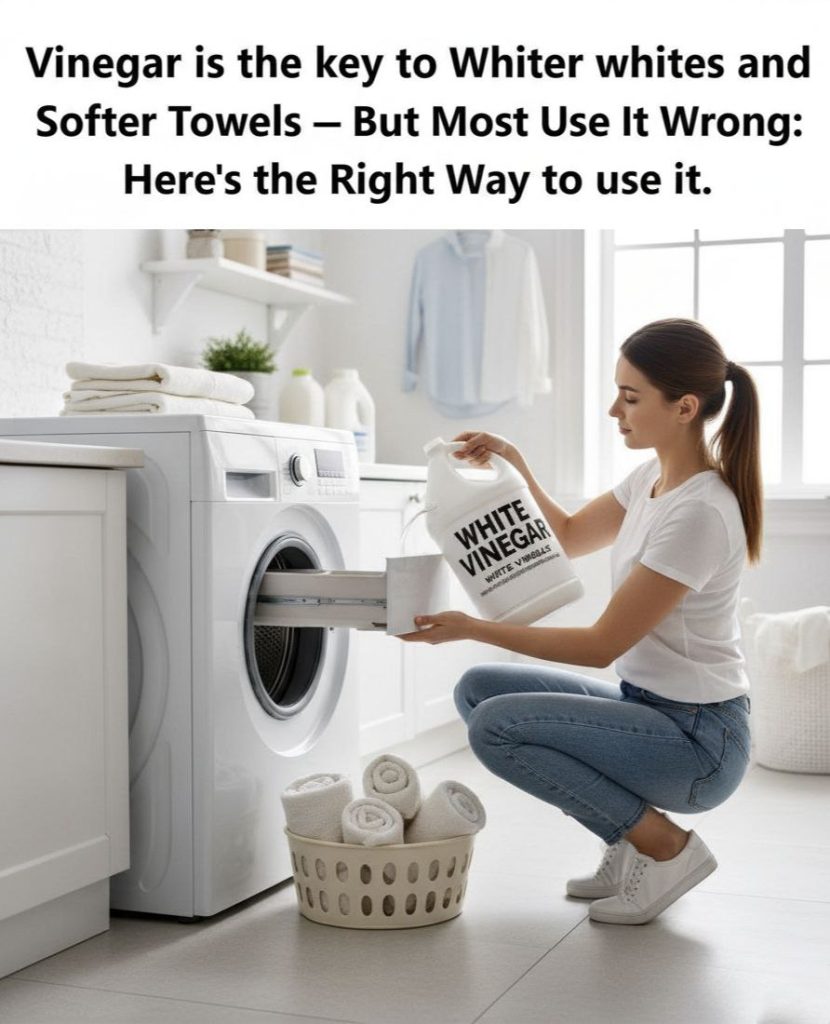
- In the rinse cycle (or fabric softener compartment), pour ½ to 1 cup of white vinegar.
- Run the cycle as normal. Dry accordingly (see notes below).
- For best effect, skip fabric softener (or use only very rarely).
Instructions for Towels (to make them soft and absorbent):
- Wash towels separately from clothing.
- Choose warm or hot water (check care label).
- Skip fabric softener and rely on vinegar to do the softening job.
- Use about ¼ to ½ cup of white vinegar in the rinse cycle (or fabric softener tray).
- Dry on medium heat (using dryer balls helps). Shake towels after drying and fold.
- Optional: Every 4–6 weeks, do a vinegar wash to “stripping build-up” (especially if towels feel rough or smell musty)
🔄 Frequency & Practical Laundry Routine
| Item | How Often | Notes |
|---|---|---|
| White clothes load | Each white-only load | Use vinegar in each rinse |
| Towels | With each load or every 2 weeks | Use vinegar instead of softener |
| Deep-clean cycle | Every 4-6 weeks | Use vinegar (½ cup) or vinegar + baking soda to strip residue |
⚠️ Common Mistakes and How to Avoid Them
- Mixing vinegar and bleach: This produces toxic chlorine gas; never combine.
- Using too much vinegar every load: Frequent acidic rinses may damage rubber seals in washing machines. Use in moderate amounts.
- Using coloured vinegars (apple cider, red wine) for whites: They may stain fabrics. Stick to clear white distilled vinegar.
- Using fabric softener with vinegar: Softener leaves residue. If using vinegar, skip softener for best effect.
- Over-loading machine or wrong temperature: Detergent and vinegar can’t work well if fabrics are cramped or water is too cool for whites.
🎯 Additional Tips for Brighter Whites and Softer Towels
- For white garments, use hot or warm water cycle (if fabric allows) combined with vinegar rinse to restore brightness.
- Use laundry balls or dryer balls instead of softener sheets to maintain towel fluffiness.
- Avoid letting damp laundry sit in the machine—this encourages mildew and fabric stiffness.
- For hard water areas, occasional vinegar rinse helps clear mineral buildup on fabrics and machine.
- If towels smell musty after washing, run them with only vinegar (¼-½ cup) to clear odors and residue.
🧠 Why This Trick Makes Such a Big Difference
- Cost-effective & accessible: White vinegar is inexpensive and found in most homes.
- Gentler than chemicals: Unlike strong softeners or bleach, vinegar is safe (when used correctly) and natural.
- Dual benefit: It enhances both whites and towels—not just one category.
- Improves longevity: Fabrics that feel good and stay brighter will last longer, saving money in the long run.
📋 Quick Checklist Before Your Next Laundry Load
- Sort whites and towels separately.
- Measure detergent correctly – avoid over-using.
- Use white distilled vinegar in rinse cycle (½ cup for whites, ¼–½ for towels).
- Skip fabric softener when using vinegar.
- Dry towels promptly, shake/fold to retain fluff.
- Every 4-6 weeks, do a vinegar-only cycle for “deep clean”.
- Avoid using vinegar on elastic garments or front-loader machine seals too often.
✨ Conclusion: Make Your Laundry Smarter, Not Harder
If your whites aren’t as bright as you’d like, or your towels feel a little stiff and limp, adding white distilled vinegar to your laundry routine correctly could be the simple change your home needs. It’s not a gimmick—it’s chemistry + habit.
Just remember: measure carefully, use at the right time (rinse cycle), skip softener, and maintain your machine. With these adjustments, you’ll see softer towels, brighter whites — and maybe even fewer complaints about “machine smell” or “rough towels”.
Ready to make your laundry routine better? Grab a bottle of white vinegar, adjust your next load accordingly—and enjoy cleaner, fluffier results.