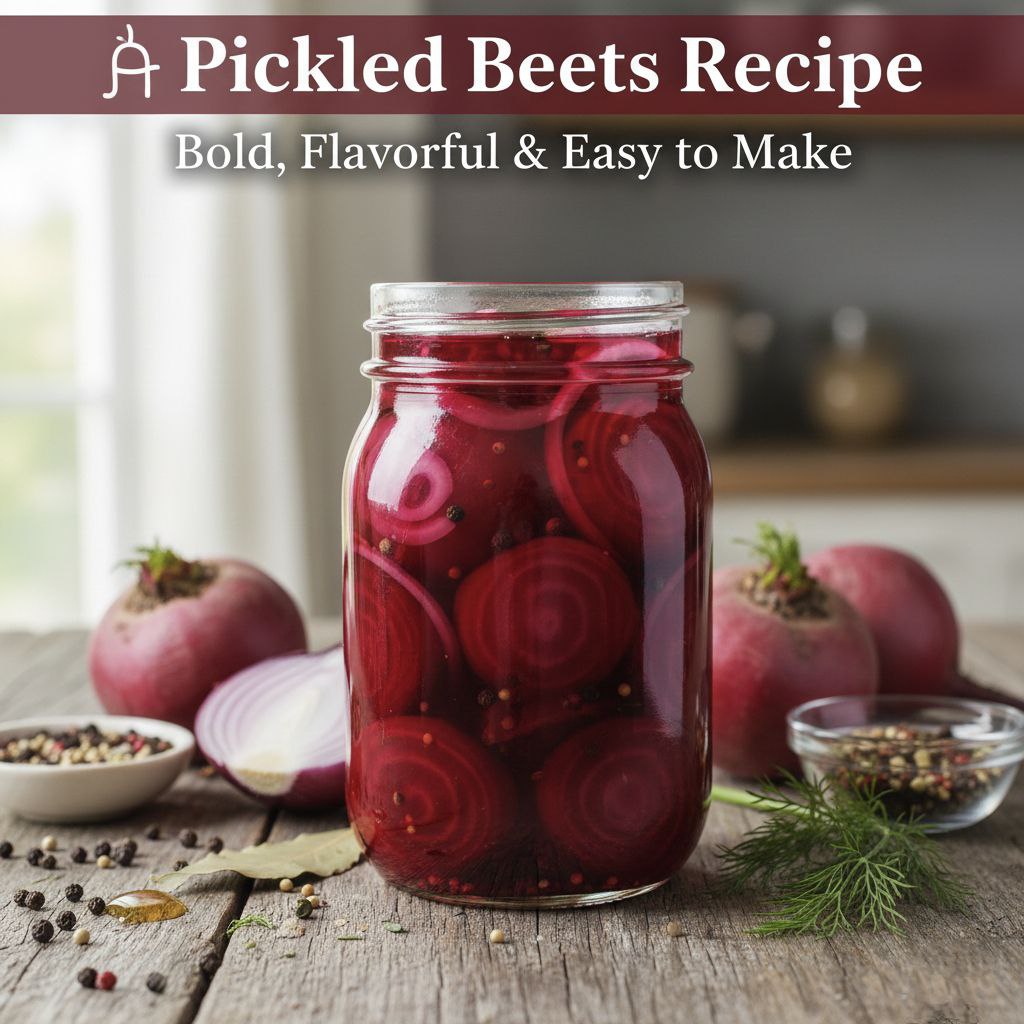
🥕 Introduction: Why Pickled Beets Are a Game-Changer
When you think of beets, you may picture deep-red roots in a salad or roasted as a side dish. But when those earthy roots are transformed into pickled beets, they become tangy, sweet, vibrantly colored, and incredibly versatile.
Pickled beets make an excellent:
- Side dish
- Snack
- Salad topping
- Condiment
- Charcuterie board addition
And the bonus? They’re surprisingly easy to make, with just a few ingredients and simple steps. Better yet: they store beautifully and get better with time as flavors meld.
In this guide you’ll discover:
- The essential ingredients to make perfect pickled beets
- Step-by-step instructions (from fresh beet to jar)
- Tips to get ideal texture and balance of sweet & tangy
- How to store and serve them creatively
- Health benefits of pickled beets + nutrition facts
- Variations (spicy, no-added sugar, fermented, etc.)
- Common mistakes and how to avoid them
Let’s dive into pickling those glorious roots!
🌍 Why Pickling Works & What Makes These Beets Stand Out
Pickling is one of the oldest preservation methods. It transforms fresh vegetables into flavorful, longer-lasting foods by immersing them in an acidic brine (vinegar) or salt brine, sometimes with fermentation.
Beets are especially suited to pickling because:
- Their natural sweetness pairs beautifully with tangy vinegar
- Their bright color stays vivid when pickled
- Their firm texture holds up well to slicing and brining
Plus, pickled beets can keep for weeks in the fridge or even be canned for longer storage. Home-made ones often taste fresher, richer and less sweet than many store-bought versions.
As one source explains:
“Pickled beets are a supernutritious, healthy staple you can have on hand… and they’re so easy to make.”
🛒 Ingredient List: What You’ll Need
Here’s a reliable set of ingredients that works beautifully for pickled beets.
🌿 Basic Ingredients
- 2–3 lb fresh beets (about 4–6 medium beets)
- 1 cup apple cider vinegar (or white vinegar)
- 1 cup water
- ⅓ cup granulated sugar (or honey/maple syrup if you prefer)
- 1 teaspoon salt (coarse or pickling salt recommended)
- ½ teaspoon dry ground mustard (optional)
- 5–10 whole black peppercorns (optional)
🔧 Optional Flavor Add-Ons
- ½ teaspoon mustard seeds
- 1 bay leaf
- 1 cinnamon stick or 2 cloves (for warm spice)
- A splash of balsamic vinegar for richness
- Sliced onion or garlic for added aroma
- Fresh herbs (dill, thyme)
🧰 Equipment
- Medium pot for cooking the beets
- Glass jar(s) with tight lid for pickling
- Cutting board and knife (or mandoline if you want uniform slices)
🔪 Step-By-Step Instructions: From Beet to Pickle
Step 1 — Prepare the Beets
- Wash the beets thoroughly, scrub off any dirt.
- Leave the skin on (this helps retain vibrant color).
- Place beets in a pot, cover with water by about an inch, bring to a boil, then reduce heat and simmer until a fork easily pierces the largest beet — ~25-45 minutes depending on size.
- Drain the beets and let them cool until you can handle them.
Step 2 — Peel and Slice
- Once cool enough, using your fingers or a cloth, slip the skins off—they should come off easily if cooked correctly.
- Slice beets into about ¼-inch thick rounds or wedges, whichever you prefer.
Step 3 — Make the Brine
- In a clean pot, combine vinegar, water, sugar, salt, and any optional spices (mustard, peppercorns, bay leaf).
- Bring to a boil, stirring until sugar dissolves. Simmer 2-3 minutes then remove from heat.
Step 4 — Pack the Jar
- Place the beet slices into a clean glass jar, filling it up but leaving ~½ inch of headspace at top.
- Pour the hot brine over the beet slices, ensuring they are fully submerged. Remove air bubbles if present.
- Seal the lid loosely while still warm; let the jar cool to room temperature, then tighten the lid.
Step 5 — Chill & Wait
Refrigerate for at least 24 hours before eating so the flavor develops. Many sources recommend waiting up to 2 weeks for best taste.
If you intend to preserve them longer (canning), process the jars in a water bath as per canning guidelines.
🍽️ How to Serve & Enjoy Pickled Beets
Pickled beets are remarkably versatile. Here are ideas:
🥣 Serving Ideas
- Serve cold as a side dish alongside grilled meats
- Toss into salads for tang and color
- Add to sandwiches or wraps for crunch and sweetness
- Use as part of a charcuterie board or antipasto platter
- Chop into dips or hummus for added flavor
- Mix into grain bowls or roasted vegetable bowls
🌈 Pairing Suggestions
- With goat cheese or feta in a salad
- With roasted nuts for texture contrast
- With citrus segments (orange/grapefruit) for brightness
- With fresh greens and vinaigrette for a light lunch
🧬 Health Benefits of Pickled Beets
✅ Nutritional Profile & Benefits of Beets
According to research, beets are packed with nutrients while being low in calories: folate, manganese, copper, potassium, vitamin C and fiber.
They also contain nitrates that can help lower blood pressure and improve cardiovascular health.
✅ Benefits of Pickled Beets
- The vinegar brine may help moderate blood-sugar levels.
- If naturally fermented (salt brine), pickled beets can contain probiotics that support gut health.
- Their vivid color comes from betalains, which are antioxidants and anti‐inflammatory agents.
- They’re a great make-ahead snack that keeps well and adds nutrient-rich food to your diet.
⚠️ Things to Be Mindful Of
- Many commercial pickled beets contain added sugar and salt. Too much salt and sugar can offset the benefits.
- People susceptible to kidney stones should moderate intake of beets due to oxalates.
- Since they’re acidic and pickled, people with sensitive digestion may need to take them in moderation.
🔄 Variations to Try
🌶 Spicy Pickled Beets
Add ½–1 sliced jalapeño or red pepper flakes to the brine.
Slice with garlic for added kick.
🥄 No Added Sugar Version
Use natural sweetener like maple syrup or honey. Some recipes eliminate sugar completely and rely on beet’s inherent sweetness.
🍯 Sweet & Warm Spice Version
Add a cinnamon stick, cloves, or allspice berries to the brine.
🥬 Raw/Light Fermentation Version
Use a salt-brine fermentation method rather than vinegar, for probiotic benefits.
🇫🇷 French Style (Betteraves marinées)
Use mild vinegar, mustard seeds, beet water and store cured.
🧠 Pro Tips for Best Results
- Use fresh beets—small/medium size is easier to cook evenly.
- Don’t overcook beets—should be tender but not mushy.
- Peel after cooking (skin should slip off easily).
- Cut uniformly so brine penetrates evenly.
- Use clean glass jars with tight lids.
- Make sure brine covers the beets fully to prevent spoilage.
- Store in fridge and consume within recommended time (or process for canning).
- Let flavors “rest” for 24–48 hours before fully indulging.
🚫 Common Mistakes to Avoid
| Mistake | Effect | Fix |
|---|---|---|
| Over-cooking beets | Mushy texture | Cook until just fork-tender |
| Using too much sugar | Overly sweet pickles | Balance sugar/vinegar |
| Not submerging beets in brine | Surface spoilage | Ensure full coverage |
| Using dirty jars | Spoilage risk | Sterilise jars first |
| Skipping chill time | Bland flavor | Wait 1+ day before serving |
🧊 Storage & Shelf Life
- Refrigerator: Store for up to 4–6 weeks if covered by brine.
- Shelf Stable (with canning): Processed and sealed jars may last up to 12 months in a cool dark place.
- Always clarify if brine is cloudy or lids bulging, discard.
- For best flavor, eat within first several weeks.
🧮 Nutrition Snapshot (Approximate)
Per ½-cup serving:
- Calories: ~40–60 (depending on sugar amount)
- Carbohydrates: 8–12 g
- Fiber: 2–3 g
- Sodium: varies depending on brine
- Rich source of folate, manganese, potassium
🎉 Conclusion: A Bright, Delicious, and Healthy Pickle
Making your own pickled beets is a rewarding kitchen project that delivers big in flavor, versatility and nutrition. Whether you serve them cold as a side, toss them into salads, wrap them into sandwiches or just snack on them straight from the jar—they bring vibrant color, sweet-tangy crunch and wholesome goodness.
This Pickled Beets Recipe is one you’ll come back to again and again. And once you start gifting jars or using them regularly, you’ll realise: pickled beets are far more than a condiment—they’re a bright gem in your kitchen repertoire.
Enjoy every briny, sweet slice.