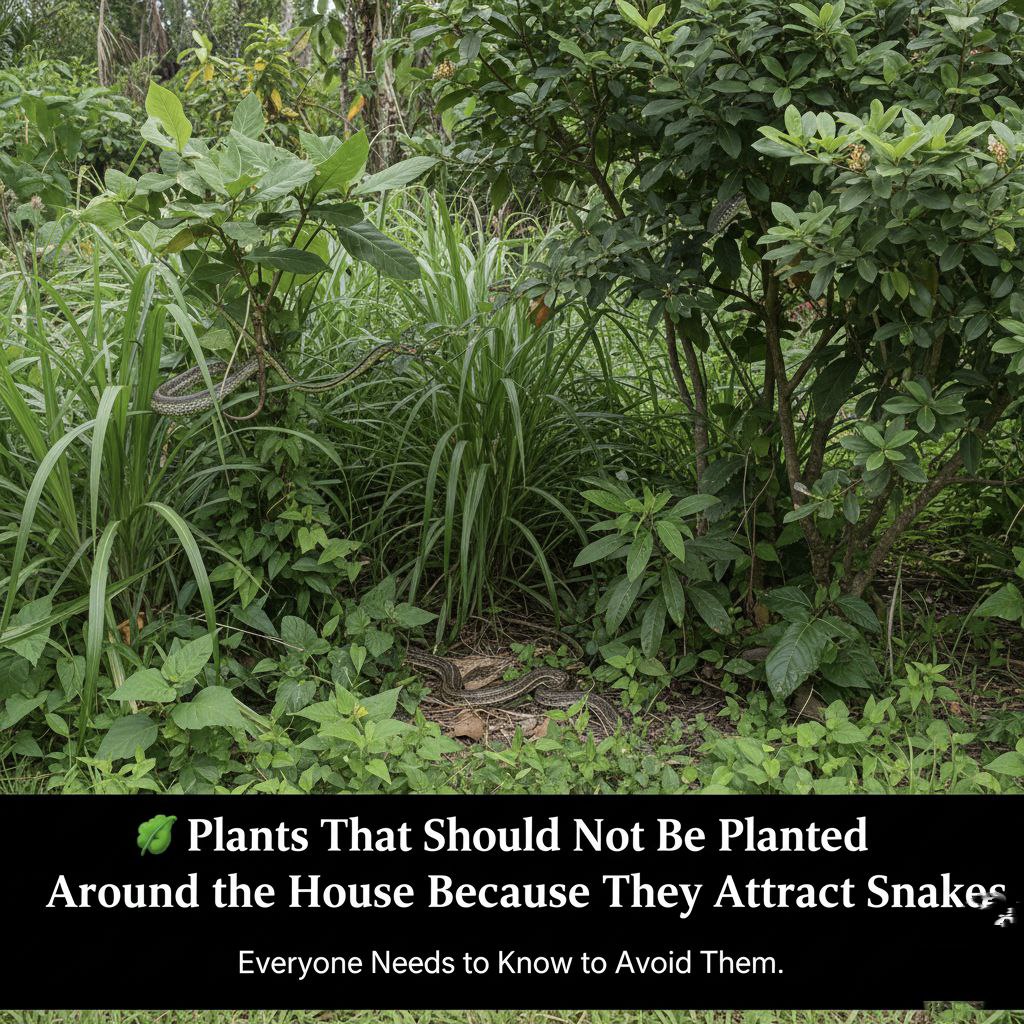
🐍 Introduction: A Beautiful Garden Can Sometimes Invite Unwanted Guests
There’s nothing quite like having a lush, green garden filled with flowers and fresh air. But what many homeowners don’t realize is that certain plants — while beautiful and easy to grow — can unknowingly attract snakes.
Snakes are naturally drawn to environments where they can find food, shade, and shelter. Some plants provide all three — attracting rodents, frogs, insects, and cool hiding spots that make your backyard their perfect home.
In this guide, we’ll explore the plants you should avoid planting near your house, why they attract snakes, and what you can do to create a safe, snake-free garden instead.
Let’s dig in! 🌱
🌾 Why Snakes Are Attracted to Certain Plants
Before we list the specific plants, it’s important to understand why snakes are drawn to some types of vegetation:
1️⃣ Cool Shade and Shelter
Snakes avoid the hot sun. Dense plants, thick shrubs, or low-lying ground cover provide them the perfect hiding spots.
2️⃣ Abundant Food Source
Snakes eat small animals like rats, frogs, lizards, and insects. If your plants attract these creatures, snakes will follow.
3️⃣ Moisture and Humidity
Wet soil, overwatering, or plants that trap humidity can make a garden feel like a spa for snakes.
4️⃣ Fallen Leaves and Debris
Plants that shed too many leaves or fruits create litter that attracts insects and rodents — food for snakes.
So, it’s not always the plant itself — sometimes it’s the environment the plant creates that makes snakes comfortable.
🚫 Plants You Should Avoid Around Your Home
🌿 1. Dense Ground Covers (Ivy, Creepers, and Money Plant Vines)
While ivy or money plant vines look beautiful climbing walls or fences, they also create the perfect snake shelter.
Their thick, intertwined leaves keep the ground cool and dark — ideal for snakes to hide during the day.
Why to Avoid:
- Difficult to spot snakes inside.
- Attracts frogs and lizards.
- Creates permanent hiding zones near walls.
Safer Alternative:
Use climbing plants like jasmine or bougainvillea, which have lighter foliage and fewer hiding gaps.
🌿 2. Lantana Bush (Lantana camara)
Known for its colorful flowers, lantana is a favorite in tropical gardens — but not so great if you want a snake-free yard.
It grows into a dense, bushy shrub, offering perfect shade and coverage for small animals and snakes.
Why to Avoid:
- Creates tangled underbrush.
- Attracts insects and frogs.
- Difficult to maintain once overgrown.
Alternative:
Opt for marigolds or hibiscus, which repel insects and have a cleaner growth pattern.
🌿 3. Lemongrass and Tall Grasses
Although lemongrass has many benefits, it can grow thick and tall — forming clumps that provide excellent hiding spots for snakes.
Why to Avoid:
- Dense base and overlapping blades hide snakes easily.
- Retains moisture near roots.
- Attracts frogs and insects.
Alternative:
Choose smaller aromatic herbs like basil, rosemary, or thyme — they repel insects and have open, visible stems.
🌿 4. Bamboo Plants
Bamboo adds a tropical touch but is also one of the most snake-friendly plants due to its dense growth and leaf litter.
Why to Avoid:
- Creates cool shade and protection.
- Leaf piles attract rodents and bugs.
- Difficult to clean underneath.
Alternative:
Use ornamental palms or ferns with more open spaces between stems.
🌿 5. Citrus and Fruit Trees with Low Branches
Snakes love fruit trees not because of the fruit, but because of the animals the fruit attracts — rats, squirrels, and birds.
The fallen fruit creates a buffet for pests, which in turn brings in snakes looking for a meal.
Why to Avoid:
- Attracts rodents and insects.
- Provides shade and cover near roots.
Alternative:
If you love fruit trees, keep the base area clean, prune low branches, and collect fallen fruit daily.
🌿 6. Areca Palm & Thick Shrubs
Areca palms and similar ornamental shrubs grow in thick clusters, providing great shelter for snakes.
Why to Avoid:
- Traps moisture underneath.
- Difficult to see or clean behind the leaves.
- Ideal for hiding during the day.
Alternative:
Use thin-stemmed plants like crotons or decorative cactus varieties.
🌿 7. Hostas and Elephant Ear Plants
These beautiful leafy plants thrive in shady, damp environments — which also happen to be a snake’s favorite.
Why to Avoid:
- Large, overlapping leaves make ideal hiding zones.
- Often grown in moist soil.
Alternative:
Replace with sun-loving succulents or lavender that don’t hold excess moisture.
🌿 8. Flowering Bushes Like Bougainvillea (Overgrown)
Even though bougainvillea can deter pests when maintained, if left unchecked, it can become too dense and spiny, providing shelter for snakes and insects.
Why to Avoid Overgrowth:
- Thick underbrush is perfect for hiding.
- Dry leaves at the base create nesting space.
Solution:
Trim regularly and keep the bottom area clean.
🧺 Plants That Attract Snake Food
Some plants don’t attract snakes directly but draw in their food sources, creating a chain reaction.
| Plant Type | Attracts | Why That’s a Problem |
|---|---|---|
| Fruit-bearing shrubs (e.g., guava, papaya) | Rats, birds | Snakes come hunting |
| Flowering plants with nectar (e.g., lilies, ixora) | Insects, frogs | Snakes feed on frogs |
| Thick groundcovers (e.g., periwinkle, money plant) | Lizards, insects | Snakes love lizards |
💡 Tip: Plant these around garden borders, walkways, and fences for best effect.
🧹 Maintenance Tips to Keep Snakes Away
Even with the right plants, maintenance is crucial. Follow these simple habits to discourage snakes from moving in:
✅ 1. Keep the Garden Clean
- Regularly trim overgrown plants.
- Remove fallen leaves, debris, and fruit.
- Clean around fences, corners, and pots.
✅ 2. Control Pests
Snakes appear where their prey lives. Use natural repellents to reduce rodents, insects, and frogs.
✅ 3. Avoid Overwatering
Too much moisture invites frogs, which attracts snakes. Keep the soil slightly dry.
✅ 4. Seal Cracks and Holes
Fill in gaps under fences, walls, or patios — snakes can squeeze through tiny spaces.
✅ 5. Use Natural Snake Repellents
Mix clove oil, cinnamon oil, and vinegar in a spray bottle. Spray around your garden edges once a week.
🧠 Common Myths About Snakes in Gardens
| Myth | Truth |
|---|---|
| “Snakes only come if there are poisonous plants.” | False. Snakes come for shelter or food, not because of plant toxicity. |
| “All garden snakes are dangerous.” | False. Most are harmless and control pests. |
| “If I plant mint, snakes will never come again.” | Not entirely true — mint helps repel but doesn’t guarantee prevention. |
| “Killing snakes keeps others away.” | False. It can actually disturb local ecosystems. |
The goal is prevention — not panic.
🏡 Safe Garden Design for a Snake-Free Home
To design a garden that looks beautiful but keeps snakes away:
- Choose open, sun-friendly plants with visible ground space.
- Avoid thick, low-lying vegetation.
- Add gravel or stones near walls (snakes dislike crawling on sharp surfaces).
- Keep compost bins and trash far from the house.
- Use motion-sensor lights to discourage nocturnal visitors.
[Insert Screenshot Here: Example layout of a snake-safe garden with open spaces and marigold borders]
🏁 Conclusion: A Beautiful Garden Shouldn’t Invite Fear
A well-maintained garden brings peace, beauty, and fresh air — not snakes.
By avoiding plants that attract them (like ivy, lantana, and bamboo) and choosing snake-repelling alternatives, you can enjoy your garden safely all year long.
Remember, snakes are not inherently bad — they play a role in nature. But when it comes to your home, prevention and awareness are the best protection.
So, plant smart, stay alert, and enjoy your greenery with confidence. 🌿